
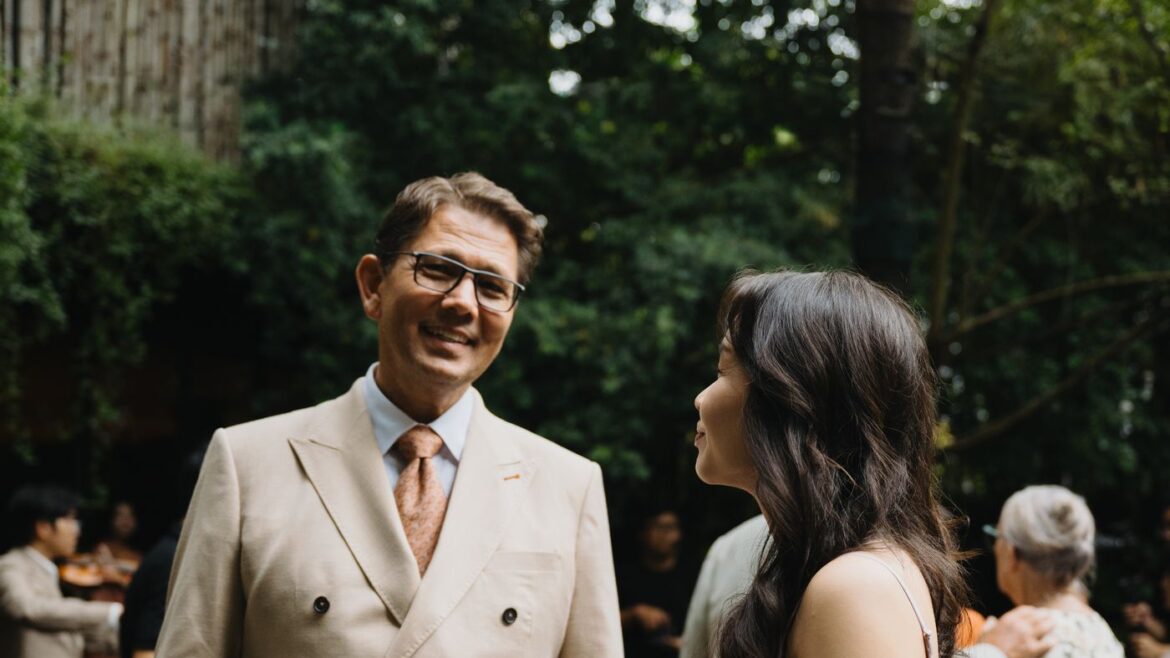
Suits for hot weather are the first thing many people ask about when they walk into our Thao Dien shop. It is mid-afternoon, the air outside is thick, and they have a wedding, a new job or a week of meetings ahead.
They want to look sharp without feeling cooked. The good news: in Saigon, that is entirely possible. It just takes the right cloth, the right build and a fit that leaves room to breathe.
This guide brings together everything we have learned cutting suits for hot weather since 2015, from fabric and lining to shirts, shoes and care.
The short answer
- Cloth: choose lightweight wool, linen, cotton or a blend with an open weave.
- Build: half canvas or an unstructured jacket, with a half lining.
- Fit: close but not tight, with a little ease across the back and under the arms.
- Colour: lighter shades by day, darker ones for evenings indoors.
- Time: about two weeks (about three weeks for full canvas), with two fittings.
Table of Contents
Why suits for hot weather need a different approach
A suit made for London or New York is built to keep warmth in. In Saigon, you want the opposite. The city is warm all year, around 28°C on an average day, and the rainy season runs roughly from May to October.
Heat is only half of it. Humidity means sweat does not dry quickly, so a suit has to let moisture escape as well as air. And most days you move between hot streets and cold, air-conditioned rooms.
Good suits for hot weather handle all three. They breathe, they cope with damp, and they look the same at 6pm as they did at 9am.
What cloth works best for suits for hot weather?
The cloth matters most. Four families cover almost everything we make for the heat.
| Cloth | In Saigon’s heat | Best for |
|---|---|---|
| Lightweight wool | Breathes; creases fall out | Office, first suit, travel |
| Linen | Coolest; creases fast | Weekends, day weddings |
| Cotton | Comfortable; feels damp in humidity | Casual suits, trousers |
| Wool-linen blend | Cool; keeps shape better than linen | Wedding guests, dinners |
Lightweight wool surprises people. A tropical wool with an open weave takes moisture away from the skin and lets creases hang out overnight. For most clients, it is the base of their wardrobe of suits for hot weather.
Linen is the coolest cloth in the shop, but it creases as soon as you sit. We love it for relaxed days. Our guide to linen, cotton and tropical wool for Saigon compares them in detail.

Weave and weight: the details that decide comfort
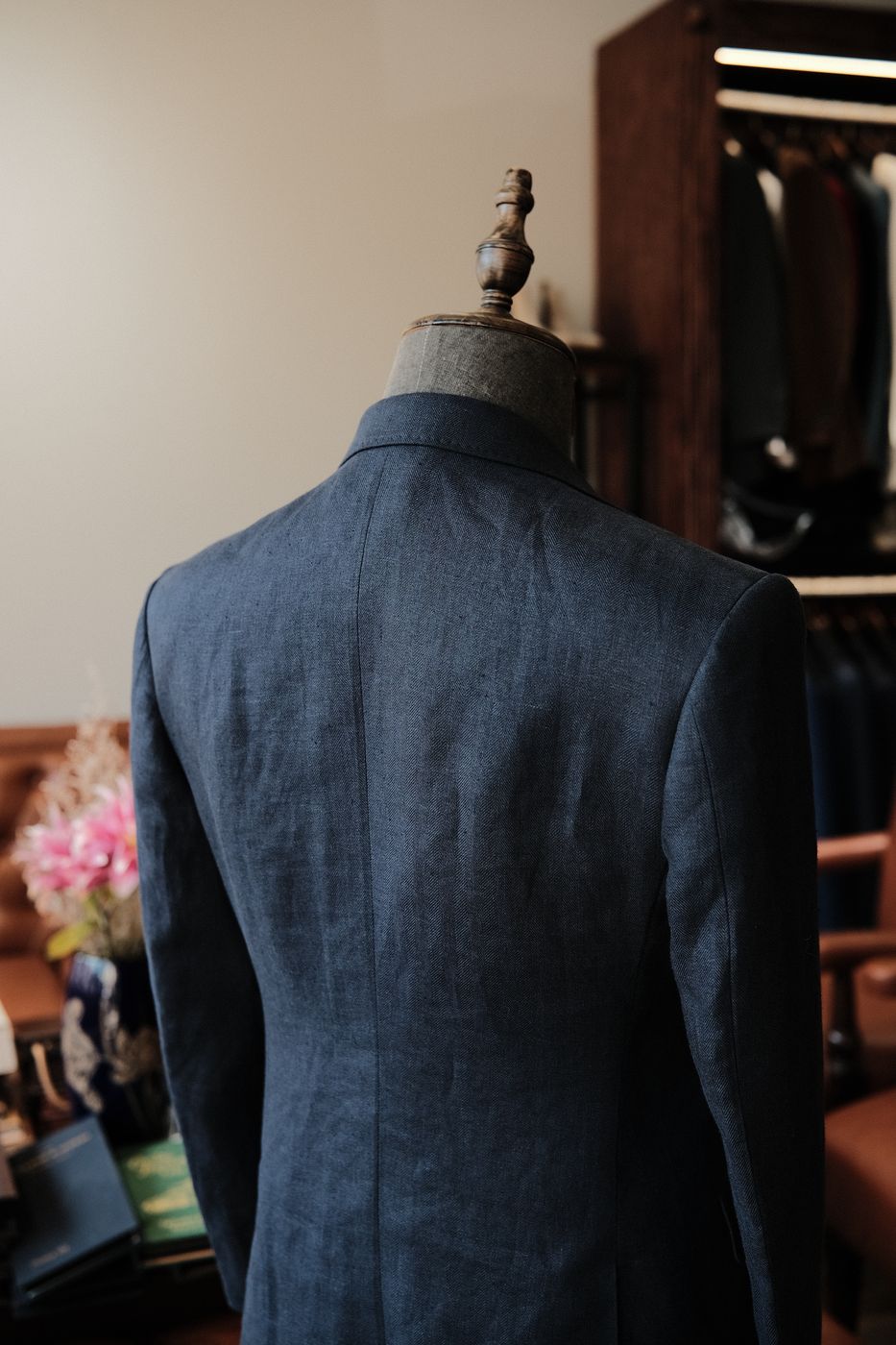
Two cloths of the same fibre can feel very different. The weave decides how much air gets through, and the weight decides how heavy the jacket feels by lunchtime.
- Hold it to the light. If you can see faint light between the threads, air can move too.
- Crush a corner. Squeeze it in your hand for a few seconds and see how quickly it recovers.
- Ask about weight. Lighter suiting is often labelled around 7 to 9 ounces, but the weave matters more than the number.
- Feel the surface. A dry, slightly crisp hand usually feels cooler than a smooth, soft one.
We carry these cloths to the shop window with you, because daylight tells you more than any label.
How should suits for hot weather be built inside?
Inside the jacket, less is usually cooler. Three choices make the biggest difference.
- Half canvas: canvas in the chest and lapels, lighter below. It keeps a natural shape with less weight.
- Full canvas: sewn canvas breathes well and shapes to you over time. In a light cloth it works in the heat too.
- Unstructured: little or no canvas and no shoulder pads. The coolest jacket you can wear, with a softer look.
A good fusing is light and stable, but glue lets less air through than sewn canvas. Our guide to full canvas, half canvas and fused construction explains each option.
Half lining, butterfly lining or none?
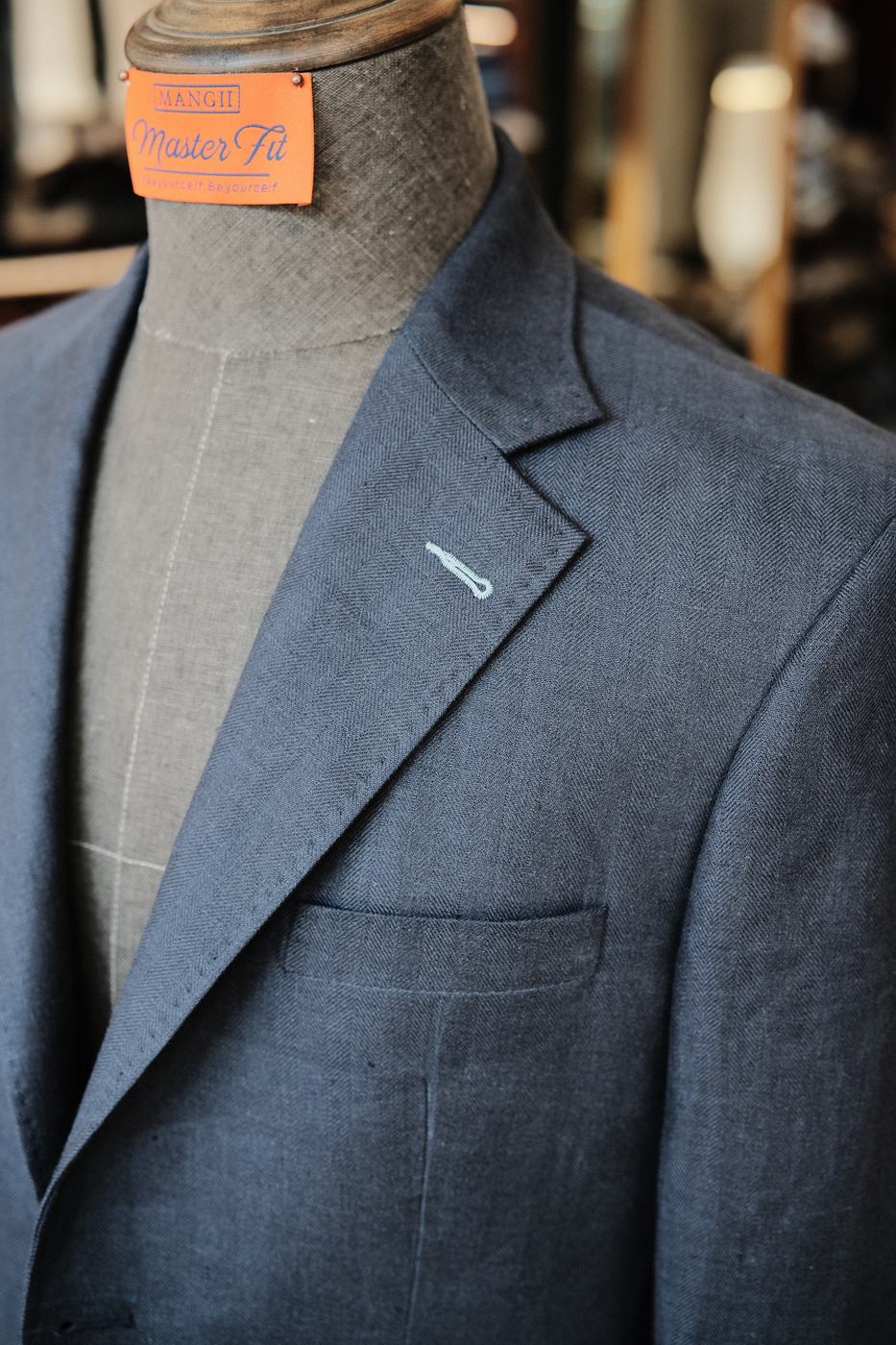
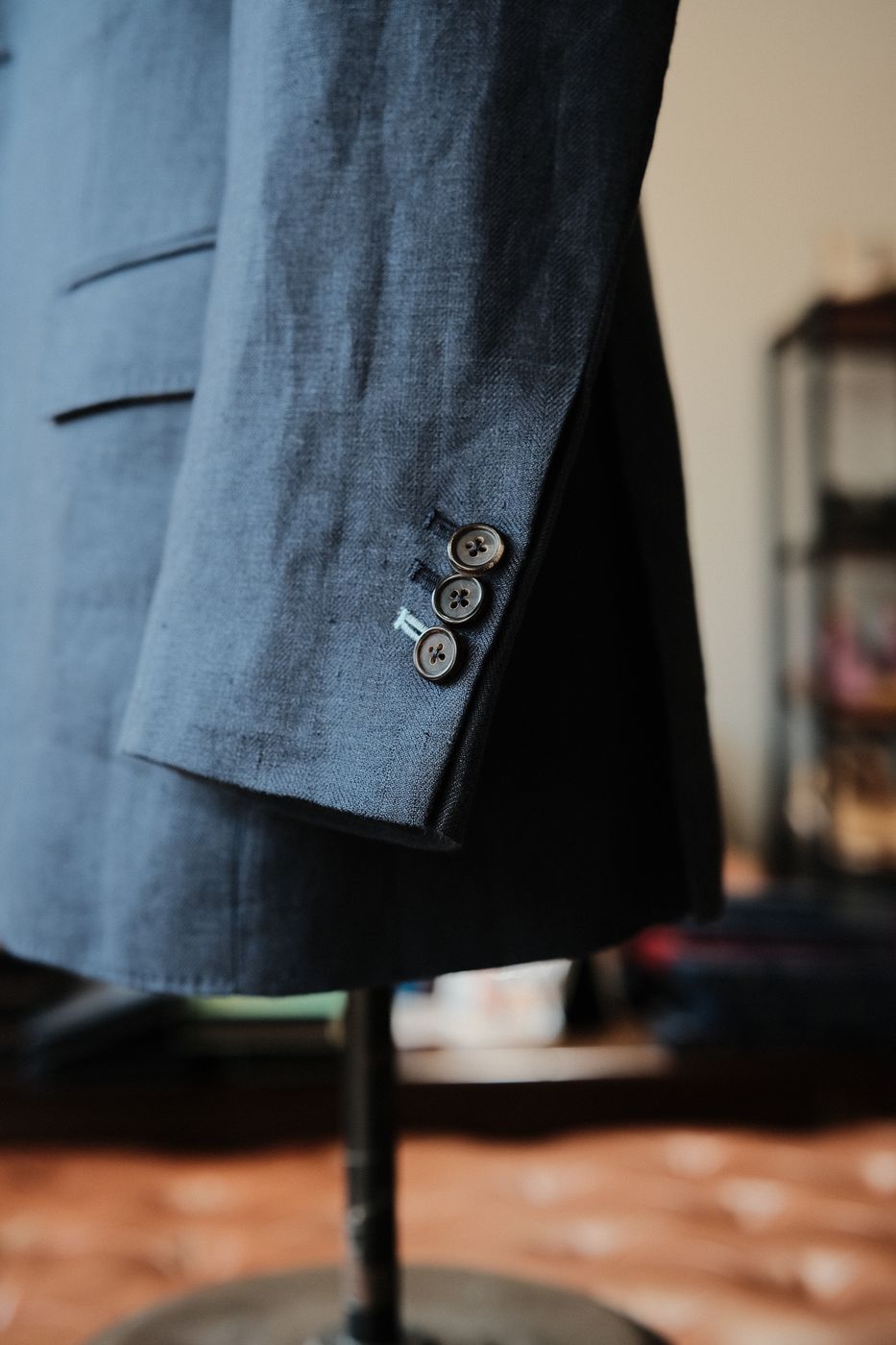
A full lining adds a layer of warmth. For suits for hot weather, we often suggest a butterfly half lining: the lining sits across the shoulders and upper back, and the rest of the jacket is left open.
We also make unlined jackets, though a few parts always need some lining. Contact us to find out which option suits your cloth. Our guide to choosing a custom lining covers colour and pattern too.
How should a suit fit in a hot climate?
Fit matters more than people expect. A jacket that is too tight traps heat against the body. A little ease across the back and under the arm lets air move every time you walk.
- Shoulders: follow yours, with no pulling at the seam.
- Chest: close, but you should be able to slide a flat hand inside when buttoned.
- Armholes: high enough to move freely, not so tight they grip.
- Trousers: a little room in the thigh, so cloth does not cling when you sit.
We check all of this at two fittings, with you moving, sitting and reaching, not only standing still.

Which colours stay cooler in the sun?
Lighter colours reflect more sunlight, so light grey, sand, stone and pale blue feel cooler on a bright afternoon. They suit daytime weddings, lunches and weekends.
Navy and charcoal are a little warmer in direct sun, but they are the most useful colours for work and evenings. Most of the day you will be indoors, so we rarely tell people to avoid them.
| Plan | Good colours |
|---|---|
| Office, five days a week | Navy, mid-grey |
| Day wedding outdoors | Light grey, stone, pale blue |
| Evening event indoors | Navy, charcoal, midnight blue |
| Weekend and travel | Sand, olive, soft blue |
Shirts and trousers for the heat
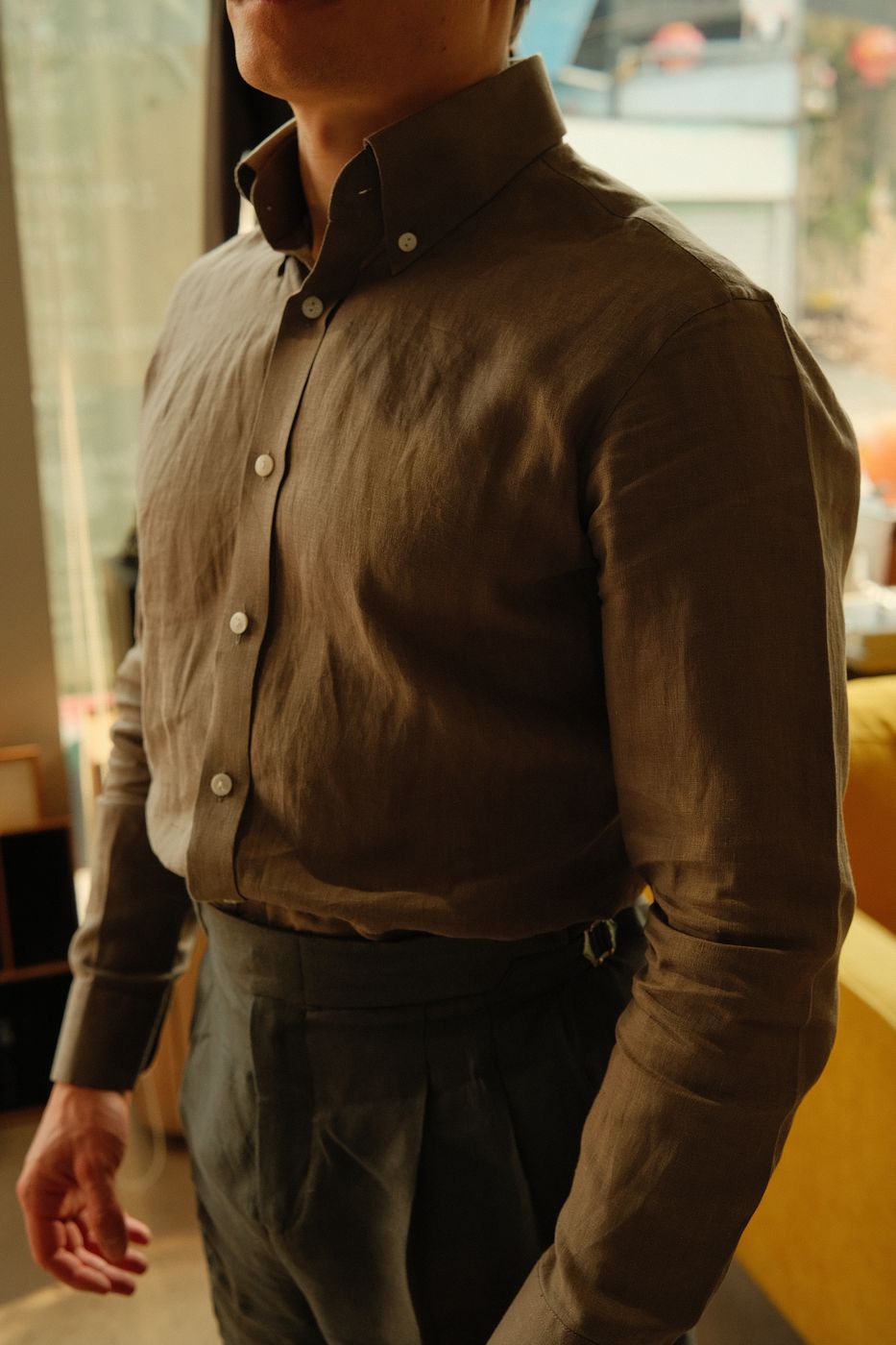
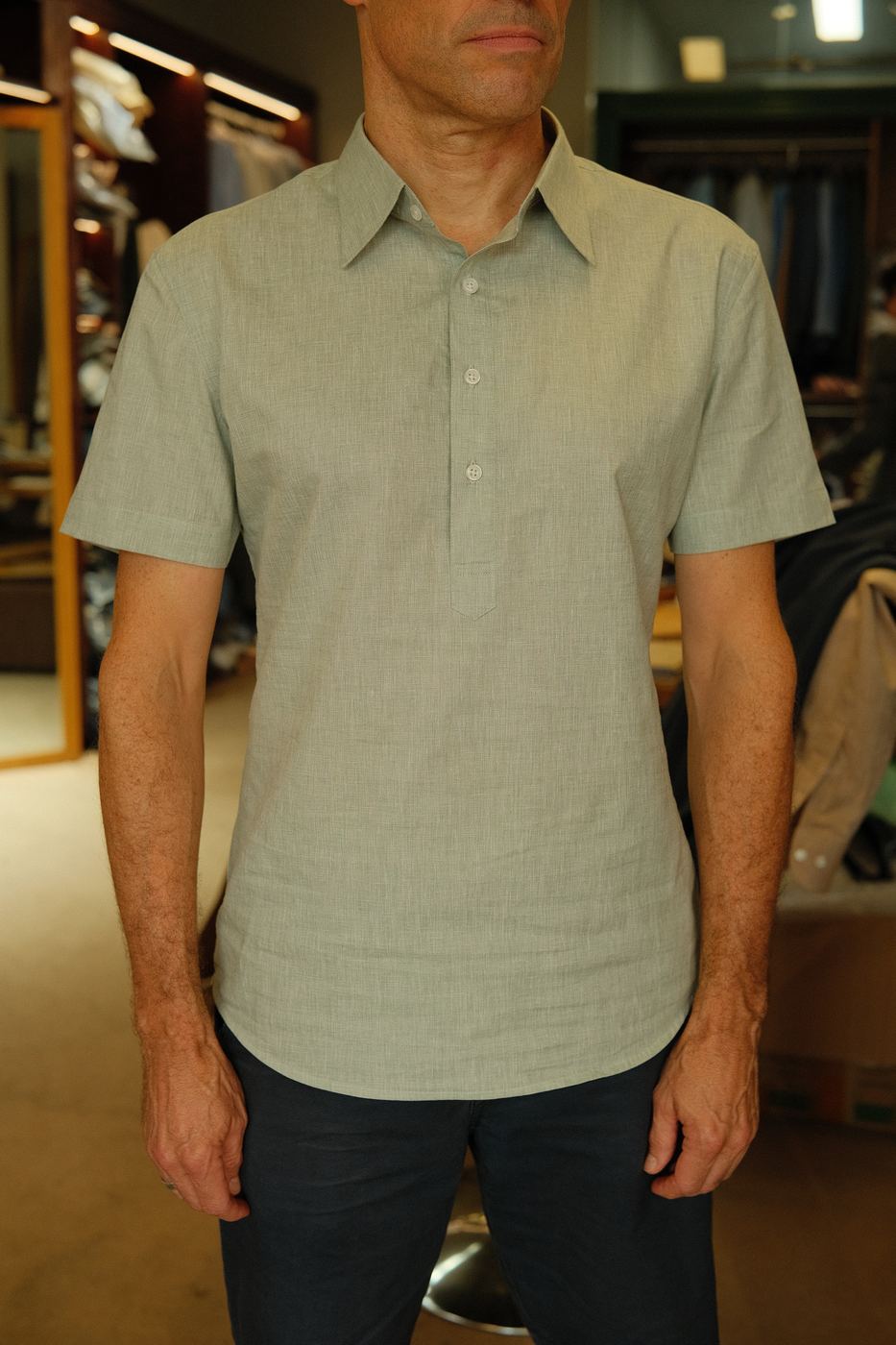
Your shirt touches your skin all day, so it matters as much as the jacket. Choose a light cotton or linen, and a collar that sits well open as well as with a tie.
- Shirts: fine cotton or linen; short sleeves for weekends.
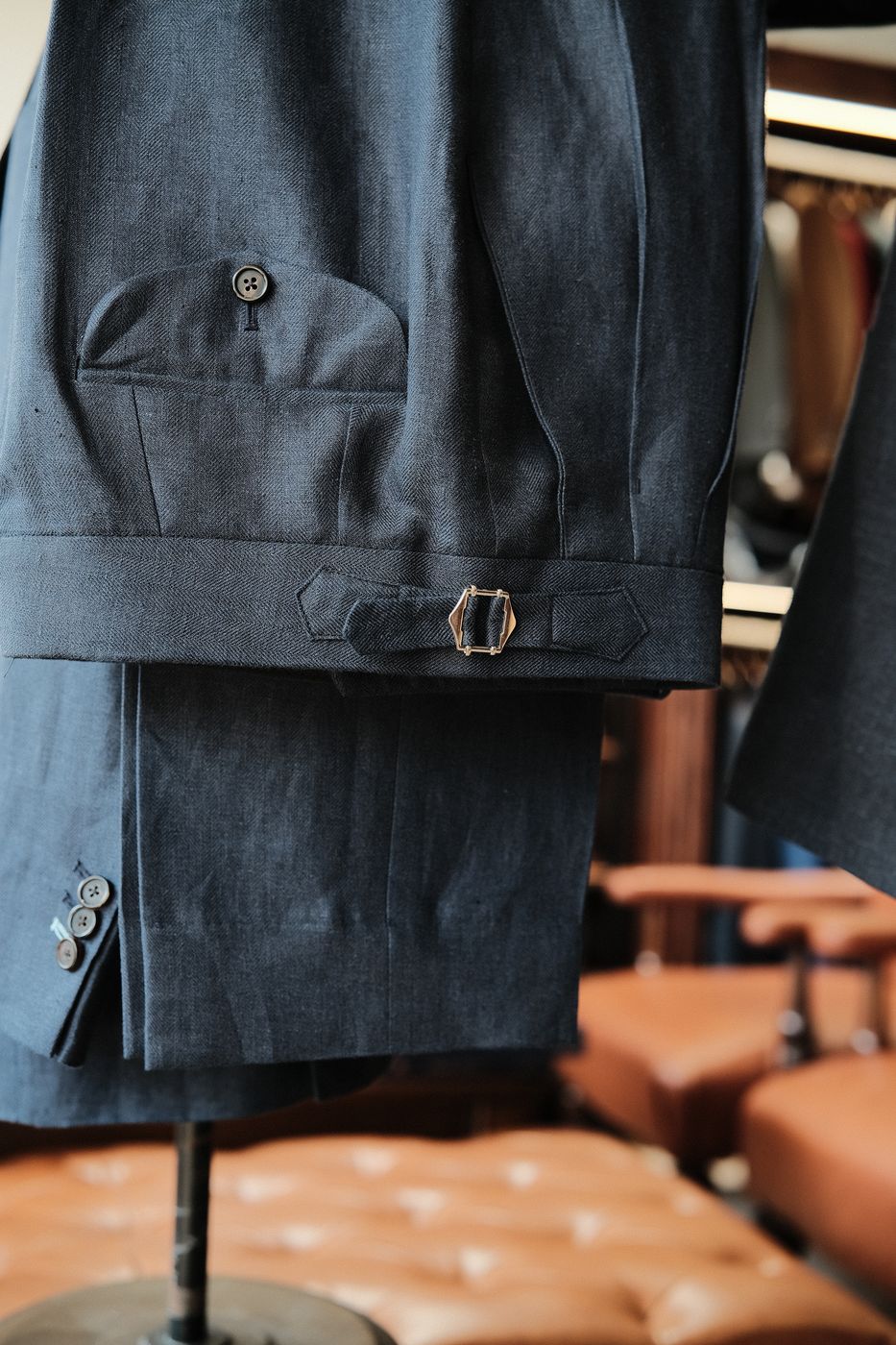
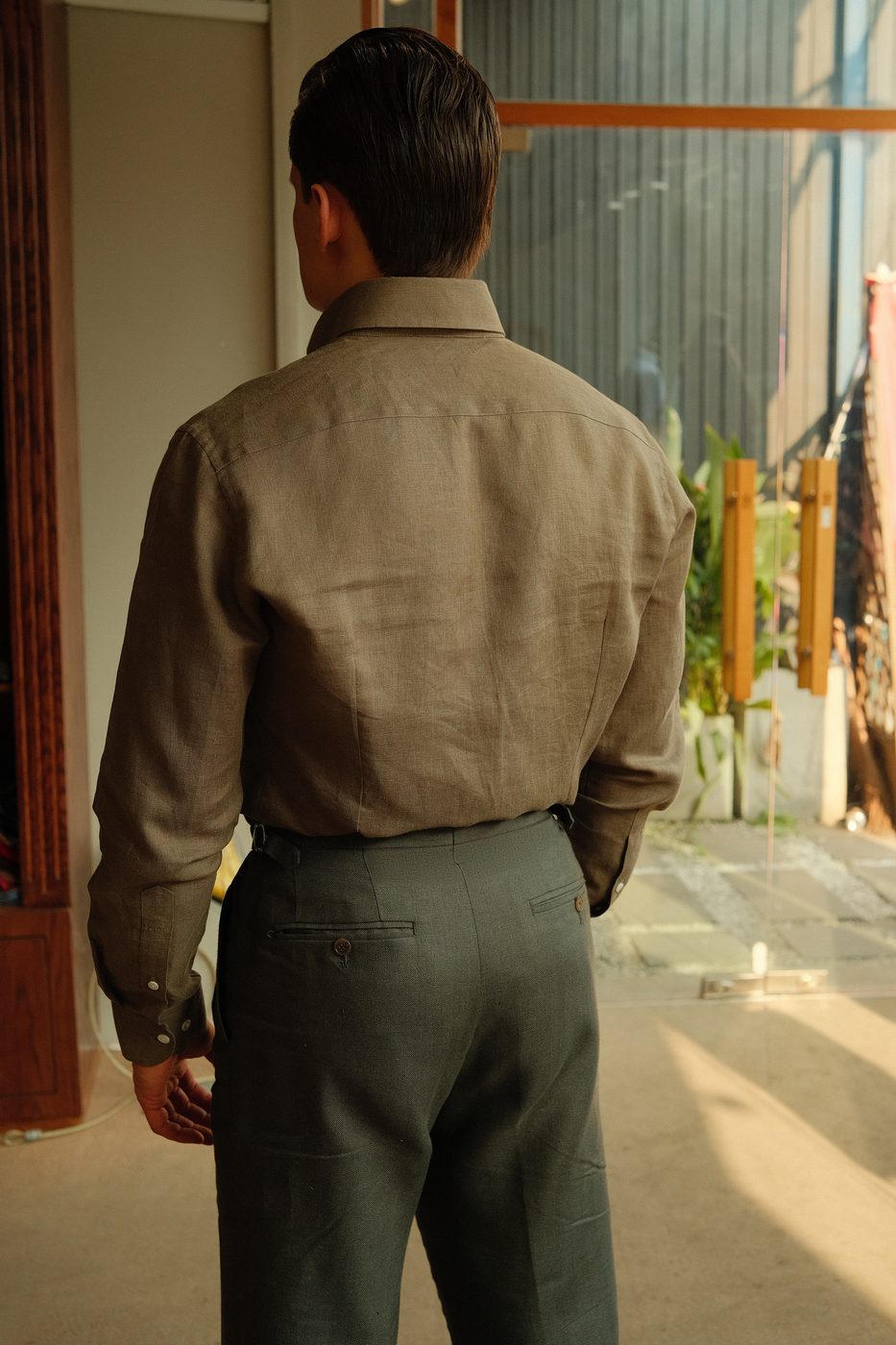
- Trousers: side adjusters instead of a belt keep the waist cooler and the line cleaner.
- Pleats: a single pleat adds a little room in the thigh, which helps when you sit.
- Separates: a linen jacket with wool trousers gives you more ways to wear each piece.
Custom shirts start from 3,200,000 VND. Two-piece suits start from 7,700,000 VND, and from 16,500,000 VND in 100% wool.

Shoes for heat and rain
Feet suffer in the heat too. Breathable leather, a good fit and the right sole make long days easier.
- Rainy season: sturdier shoes with a rubber or studded sole grip wet pavements.
- Dry season: lighter leather soles and loafers feel cooler.
- Socks: thin cotton or wool socks help far more than going without.
Our guide to Goodyear welted and Blake stitched shoes explains which construction suits wet streets.
Dressing for occasions in Saigon’s heat
Different events call for different suits for hot weather. Here is how we usually advise clients.
- Office: lightweight wool in navy or grey, half canvas, half lined.
- Day wedding: a wool-linen blend in a light colour. Our wedding suit guide for grooms covers the rest.
- Evening gala: a darker suit or a dinner suit in light wool, since ballrooms are cool. See what to wear to a gala.
- Weekend: an unstructured linen or cotton jacket with lighter trousers.
Christmas parties, New Year’s Eve and Tet all fall in the dry season, when Saigon is at its most comfortable. We are preparing seasonal guides for each of them.
What to wear in Saigon: a simple guide by setting
Visitors often ask us what to wear in Saigon beyond the suit. The city is relaxed in the street and smarter indoors, so think in layers you can take off.
| Setting | What works |
|---|---|
| Street and cafés | Linen or cotton shirt, light trousers, loafers |
| Office | Lightweight suit, tie optional in many firms |
| Hotel bars and rooftops | Unstructured jacket, open collar |
| Temples and family visits | Long trousers, covered shoulders |
| Weddings and galas | Full suit or dinner suit, in light wool |
A light jacket you can carry is the most useful piece in a Saigon wardrobe. It goes on when you walk into a cold room and comes off when you step back into the heat.
Building a wardrobe of suits for hot weather
You do not need many suits for hot weather. You need the right few, so each one can rest between wears and dry out properly in humid air.
- First suit: lightweight wool in navy. It works for meetings, weddings and dinners.
- Second suit: mid-grey or light grey wool, so you can alternate days.
- Third piece: a linen or wool-linen jacket to wear with odd trousers at weekends.
- Then: extra trousers for your favourite suit, because trousers wear out first.
- Shirts: five or six light shirts in white and pale blue cover most weeks.
With three or four pieces, you can dress well every day in Saigon without any one suit working too hard.
Travelling with suits in a hot climate
Suits for hot weather also have to travel. Many of our clients fly often between Saigon, Singapore, Bangkok and home. A few habits keep them looking good on the road.
- Pack wool, not linen, for business trips. Wool recovers from folding; linen does not.
- Fold the jacket inside out at the shoulders, so the outer cloth is protected.
- Hang it in the bathroom while you shower; the steam lifts most creases.
- Bring a spare shirt for long days, and a light jacket for the plane.
Five mistakes we see with suits for hot weather
- Choosing heavy cloth for the photos. It looks rich but becomes tiring within an hour outside.
- Cutting it too tight. Close is good; tight traps heat and creases more.
- A full lining by default. Ask about a butterfly half lining first.
- One suit for every day. In humid air, a suit needs a day off to dry.
- Forgetting the shirt. A thick or synthetic shirt undoes all the work of a light suit.
Caring for suits in Saigon’s humidity
Humidity is hard on every cloth. A few habits keep suits for hot weather fresh for years.
- Hang the jacket on a wide, shaped hanger as soon as you get home.
- Let it air for a few hours before it goes back in the wardrobe.
- Rest each suit for a day between wears.
- Steam rather than iron, and keep dry cleaning to a few times a year.
- Leave space in the wardrobe so air can move between garments.
Questions to ask before you order suits for hot weather
Whichever tailor you choose, a few questions show quickly whether they understand the climate. These are the ones we would ask in your place.
- What is the weave of this cloth, and can I see it against the light?
- What goes inside the front of the jacket: sewn canvas, fusing or nothing?
- Can the jacket be half lined, and what would that change in the shape?
- How many fittings are included, and will I move and sit at each one?
- How should I care for it through the rainy season?
Clear answers mean the tailor has thought about suits for hot weather before. Vague answers usually mean a winter suit made in a lighter colour.
At ManGii, every order includes two fittings. At the first, the jacket is held together with white basting stitches, so we can still move the shoulder, the waist and the length before the final sewing.
Suits for hot weather at a glance
| Choice | Our usual advice |
|---|---|
| Cloth | Lightweight wool, linen or a blend |
| Weave | Open, airy |
| Construction | Half canvas or unstructured |
| Lining | Butterfly half lining |
| Fit | Close, with ease in back and arms |
| Shoes | Rubber sole in rain, leather when dry |
How we make suits for hot weather at ManGii
We have cut and sewn suits for this climate in our own workshop since 2015. Every order starts with a conversation about where you will wear it, how warm you run and how often you will wear it.
Then we choose the cloth together at the window, cut for your body, not a mannequin’s, and fit you twice. A suit takes about two weeks, or about three weeks for full canvas. If you need it sooner, tell us your date and we will see what we can do.
In more than ten years we have dressed 35,000+ clients and made 120,000+ tailored pieces. Browse our cloths on the materials page before you visit.
Frequently asked questions
What is the best fabric for suits for hot weather?
For most people, a lightweight tropical wool. It breathes, handles sweat and lets creases fall out. Linen is cooler but creases fast, and a wool-linen blend sits in between.
Is a lightweight suit for hot weather still formal?
Yes. Lightweight wool in navy or grey looks as formal as any heavier suit. The difference is how it feels after an hour outside, not how it looks.
Are suits for tropical climate always unlined?
No. Many have a butterfly half lining, which keeps the shape of the shoulders and lets the back breathe. Unlined jackets are cooler still, though a few parts always need some lining.
What should I wear in Saigon for business meetings?
A lightweight wool suit in navy or mid-grey, a cotton shirt and polished shoes. Most meetings are air-conditioned, so a light jacket is comfortable indoors.
Does a lighter colour really feel cooler?
In direct sun, yes. Light grey, sand and pale blue reflect more heat than navy or black. Indoors, the difference is small.
How many suits for hot weather should I own?
Two or three lets each suit rest between wears, which matters in humid air. Start with navy and grey in lightweight wool, then add a linen or blend for weekends.
How long do suits for hot weather take to make at ManGii?
About two weeks for half canvas or fused, and about three weeks for full canvas, with two fittings. Linen and lightweight wool take the same time as any other cloth.
Can I wear a suit in Saigon’s rainy season?
Yes. Choose wool rather than linen or cotton, because it copes with damp better and dries more quickly. Hang the jacket to dry on its hanger if you are caught in a storm, away from direct heat.
Can I see the cloths before ordering?
Yes, and we think you should. Come to the shop and we will show you wool, linen, cotton and blends side by side, in daylight.
Come and feel the cloth
The best way to choose suits for hot weather is to hold the cloth, feel the weight and try a jacket on. Bring your plans for the year, and we will help you build a wardrobe that works in Saigon.
Visit us at 31 Xuan Thuy, Thao Dien, open every day from 10am to 7pm, or book your appointment online.