
A custom shoe manufacturer for tailors solves a problem most tailoring shops know well. A client loves his new suit, then asks: “And the shoes?” You can send him somewhere else, or you can make the shoes too.
ManGii began as a shoe workshop in Saigon in 2015, before we cut our first suit. Today our shoe workshop makes pairs for tailoring houses abroad, from measurements their own tailors take.
This guide is for tailors and shop owners thinking about adding shoes. It covers what to measure, which styles and constructions to offer, how orders move, and what to look for in a partner.
The short answer
- You measure, we make. You take the foot measurements and choose the style with your client; our shoe workshop makes the pair.
- Two constructions. Goodyear welted for sturdy everyday shoes; Blake stitched for lighter, sleeker pairs.
- Suits and shoes together. Our tailoring and shoe workshops sit side by side, so both can ship in one box.
- Experience abroad. We make for 18 partner houses in 6 countries on 3 continents.
- Pricing. Quoted per order, based on leather, construction, style and volume.
Table of Contents
Why should a tailoring shop offer custom shoes?
Because the outfit is not finished at the trouser hem. A client who has just spent time choosing cloth, lapels and lining usually cares about what goes on his feet. If you cannot help, he buys shoes somewhere else, and the look you planned is left to chance.
Shoes also bring clients back. A good pair needs care and, one day, a new sole. Every resole and every second pair is another visit to your shop.
And shoes suit the way tailors already work. You measure, you advise on style, you fit. A custom shoe manufacturer for tailors simply takes those measurements to the bench, the same way your suit workshop does.

What does a custom shoe manufacturer for tailors actually do?
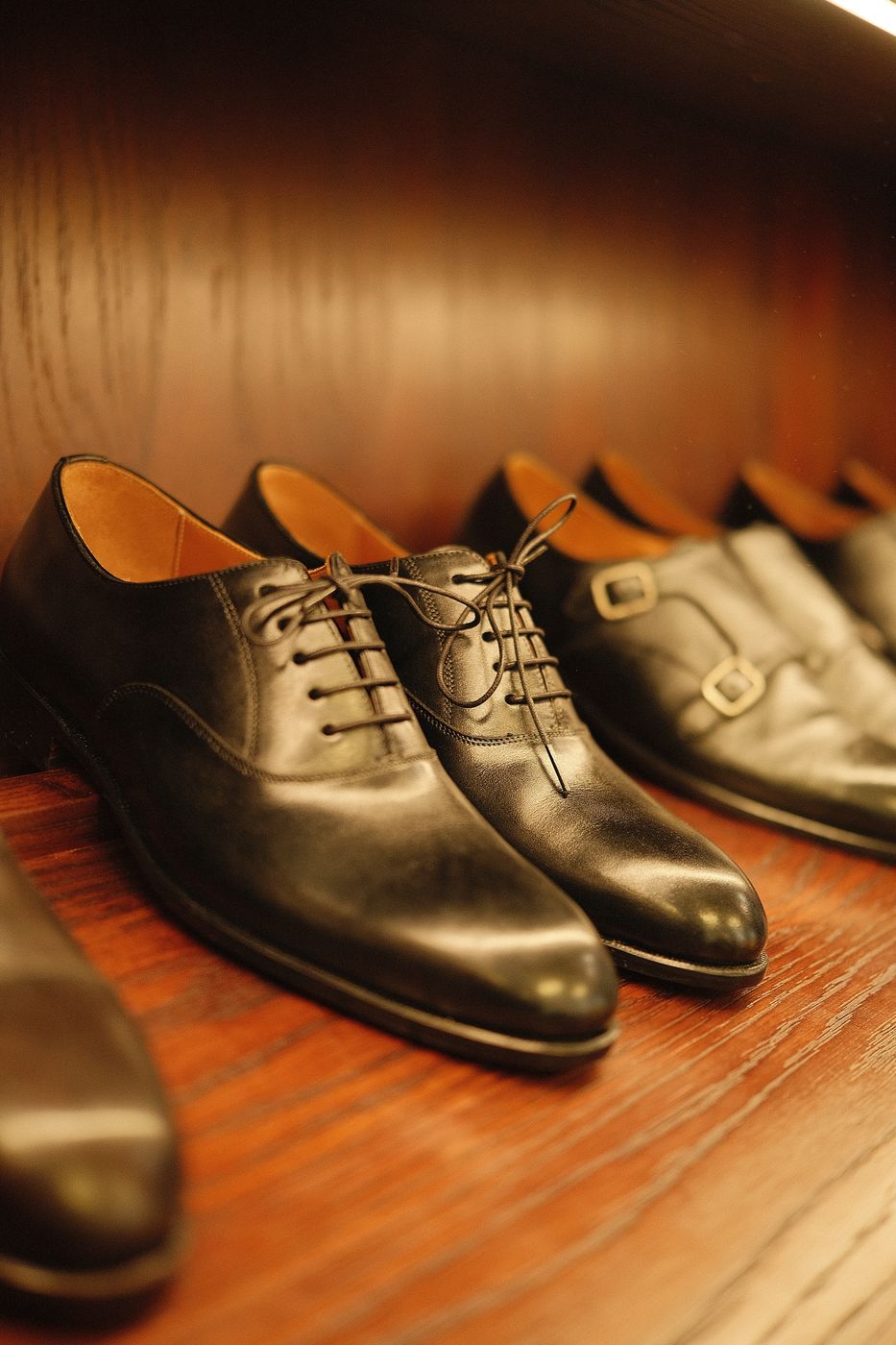
A custom shoe manufacturer for tailors makes shoes from measurements and choices sent by a tailoring shop. The shop keeps the client, the fitting and the advice. The workshop keeps the lasts, the leather, the cutting tables and the stitching machines.
It is not the same as buying finished shoes wholesale. Each pair is made for one person, in the style, leather and colour chosen with that person.
Some shops call these bespoke shoes, others custom or made to order. In the strictest sense, bespoke shoes are built on a last carved for one person, often with a trial shoe. Agree the word you will use with your clients, and keep it honest.
For a tailor, it works much like a made to measure manufacturer for suits. The difference is in what you measure, and in how much the choice of last and construction affects the fit.
How does a shoe order move from your shop to our workshop?
Every order with us as your custom shoe manufacturer for tailors follows the same path. The first steps happen in your shop; the rest happen in ours.
| Step | Who | What happens |
|---|---|---|
| 1. Agree the range | You and us | Styles, leathers, colours, constructions |
| 2. Measure | You | Both feet, tracing, photos, notes |
| 3. Check | Us | We read the sheet and ask questions |
| 4. Make | Us | Cutting, closing, lasting, sole, finish |
| 5. Ship | Us | Worldwide, with suits if ordered |
| 6. Fit and feedback | You | Try on, then tell us what you noticed |
1. Agree the range
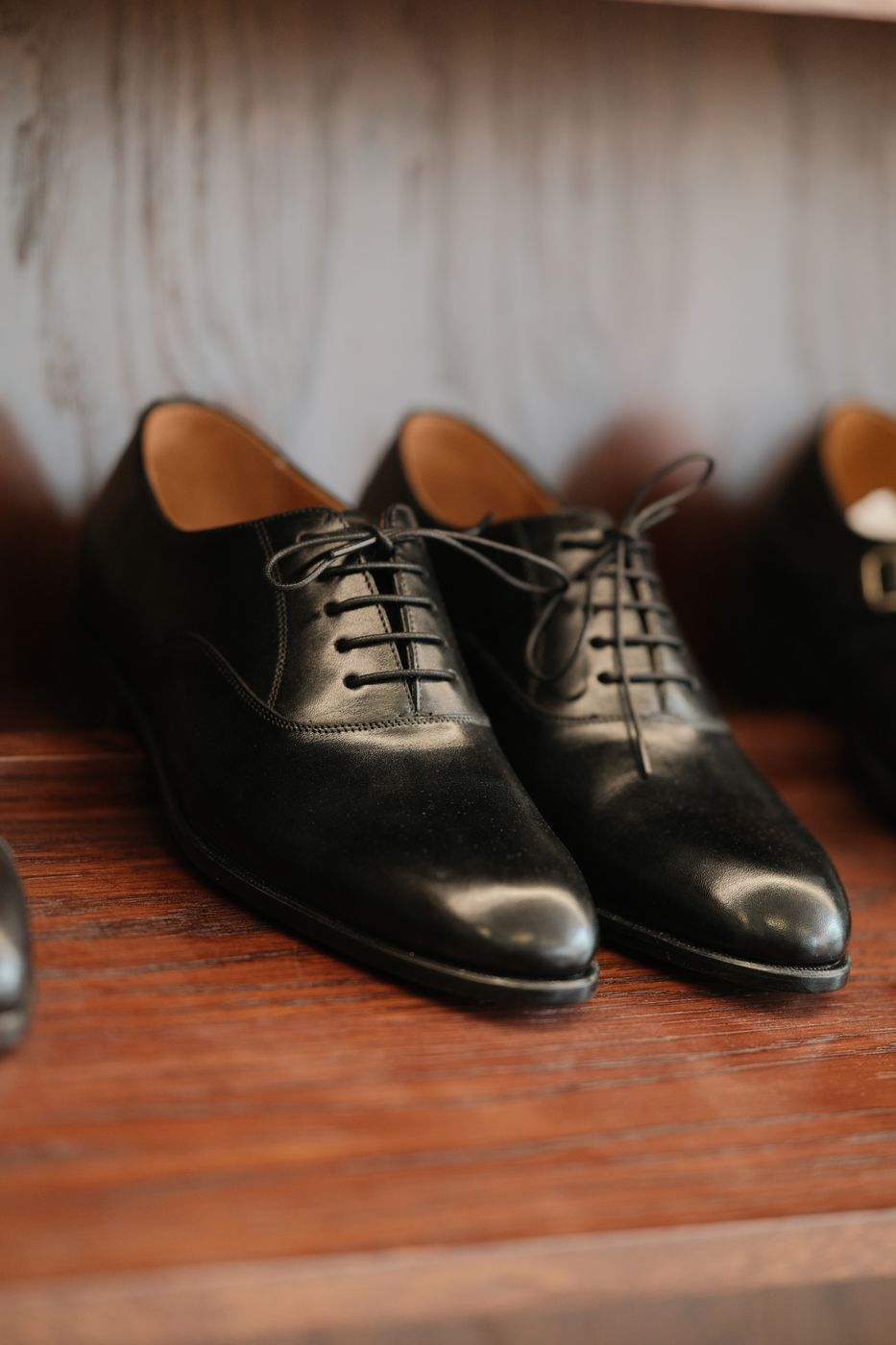
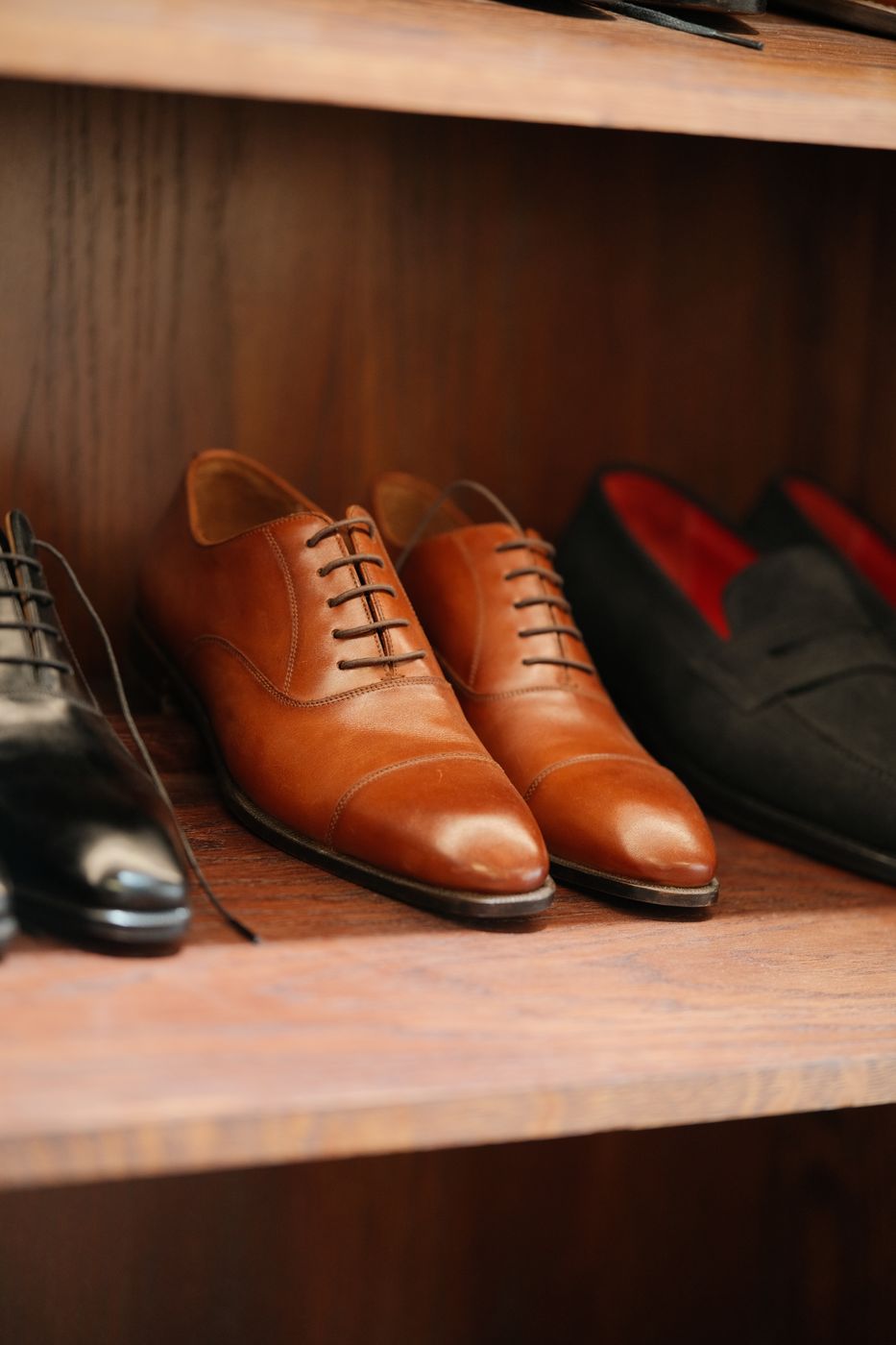
Before the first order, we agree a small range you are comfortable selling. Most shops start with four or five styles: a plain Oxford, a cap-toe Oxford, a Derby, a monk strap and a loafer.
Then we choose leathers and colours for each, and the construction. A short, clear range is easier for your staff to explain and easier for us to make consistently.
2. Measure both feet
Shoe measurements are fewer than suit measurements, but each one matters more. A centimetre too tight across the ball of the foot is felt with every step.
These are the details that help us most:
- Length and width of both feet, standing, in the socks the client usually wears.
- Girths around the ball of the foot, the instep and the heel.
- A tracing of each foot on paper, with the client standing.
- Photos of both feet from the side, front and back.
- Current shoes: the size and brand the client wears now, and where they rub.
- Notes: a high instep, a wide forefoot, a narrow heel, one foot larger than the other.
Measure in the afternoon if you can. Feet swell through the day, and a measurement taken at noon fits better at night than one taken at nine in the morning.
3. We check the sheet before we cut
Before any leather is cut, a shoemaker reads the whole sheet and compares the numbers with each other. Length against width, ball girth against instep, left foot against right.
If something looks unusual, we ask before we cut. One message now is far cheaper than a pair that has to be remade.
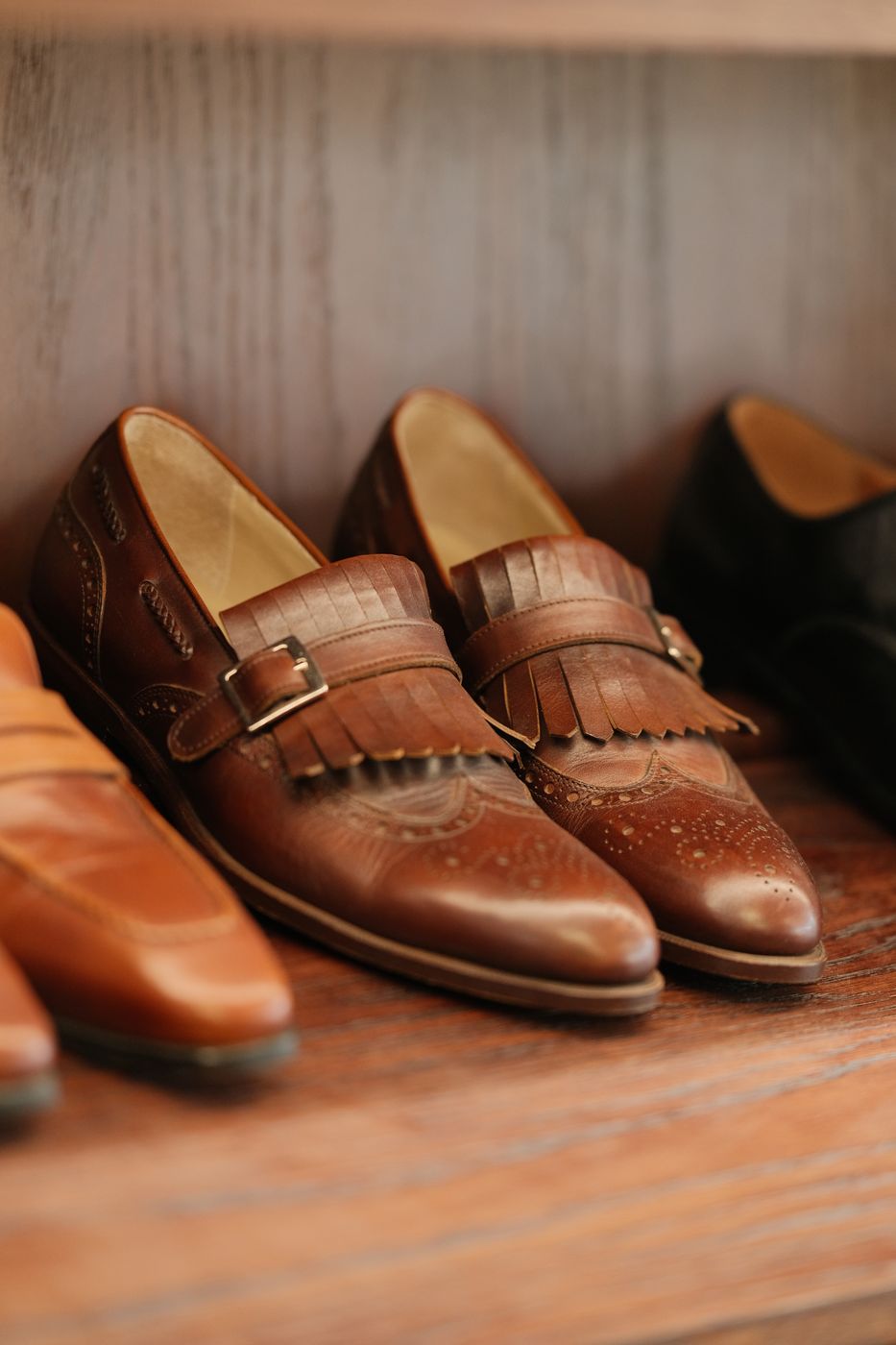
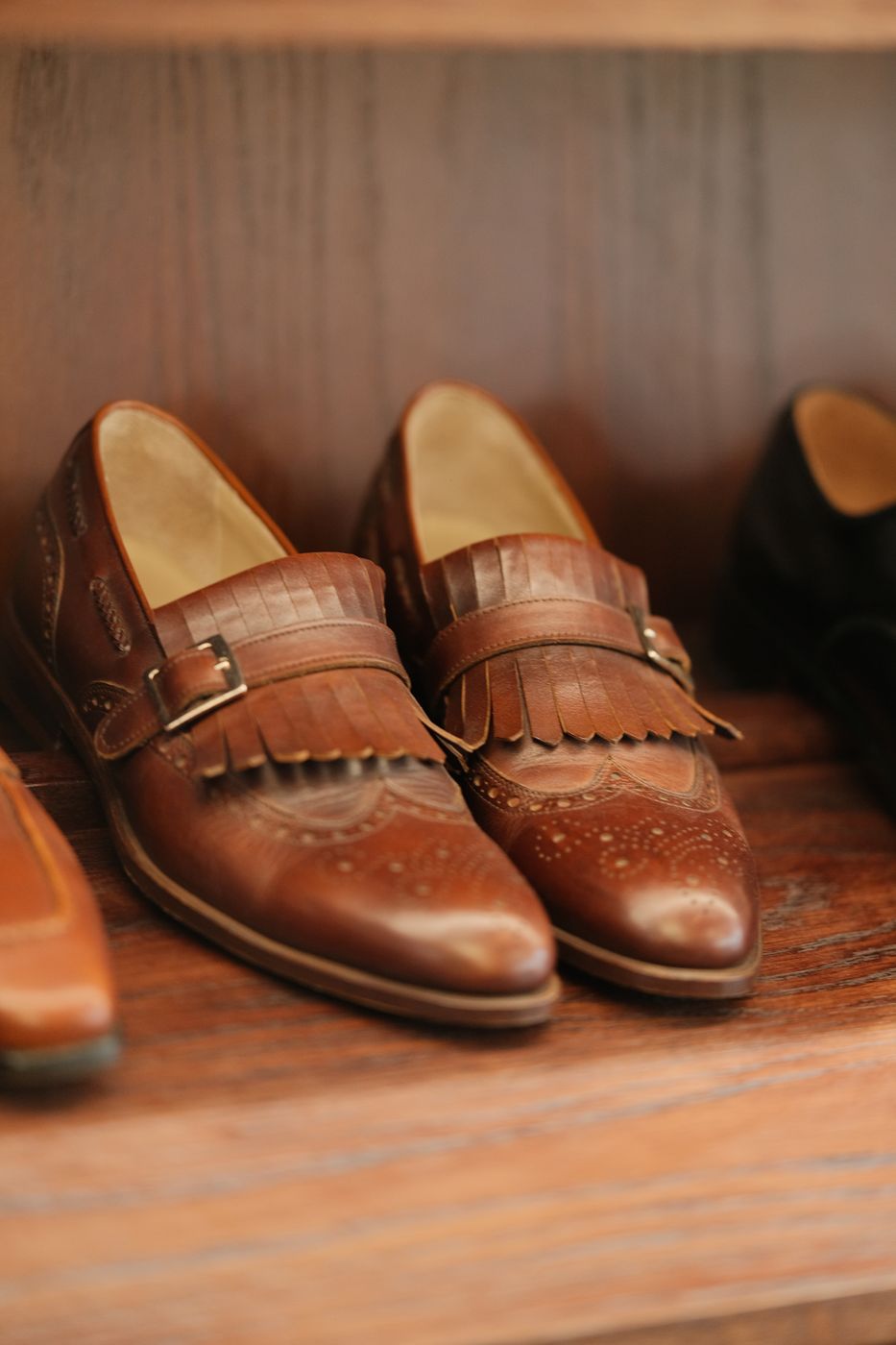
4. Our shoe workshop makes the pair
The upper is cut from the leather, then stitched together, or closed. It is pulled over the last, the form that gives the shoe its shape, and left to set.
Then the sole is attached, by Goodyear welting or Blake stitching, and the shoe is finished, edged and polished. The pair is checked side by side before it is boxed.
5. We ship, often with the suit
We ship worldwide. Because our tailoring and shoe workshops are next to each other, a client’s suit and shoes can be packed and shipped together, which saves you a second delivery.
6. You fit, then tell us
When the pair arrives, your client tries it on in your shop. Watch him walk, check the heel and the width, and ask how it feels across the instep.
Then tell us what you noticed. A note such as “heel slightly loose on the left” goes on that client’s record, so the next pair starts closer.
Which constructions should you offer?
Both of our constructions join the upper to the sole, but in different ways. The choice changes how the shoe feels, how it looks from the side and how it is repaired.
| Construction | Character | Best for |
|---|---|---|
| Goodyear welted | Sturdy, slightly stiffer at first, can be resoled many times | Daily office shoes, clients who want a pair for years |
| Blake stitched | Lighter, more flexible, closer-cut edge | Sleek dress shoes, loafers, warm climates |
In a Goodyear welted shoe, a strip of leather called the welt is stitched around the upper, and the sole is stitched to the welt. In a Blake stitched shoe, the stitch runs straight through the insole to the sole.
Many shops offer Goodyear welted shoes as their main line and Blake stitched loafers as a lighter option. We are happy to help you decide what suits your clients.
Which styles sell best alongside a suit?
A small range of classic styles covers most clients:
- Plain or cap-toe Oxford in black and dark brown: weddings, business, black tie.
- Derby: more relaxed, and easier for clients with a high instep.
- Single or double monk strap: for clients who want a little character.
- Loafers, plain or kiltie: for linen, summer suits and travel.
Clients ordering bespoke shoes for the first time almost always choose one of these. Start with black and two browns. Add colours only when your clients ask for them, so your range stays easy to explain.
What should you ask a custom shoe manufacturer for tailors?
Before you send the first order, ask any custom shoe manufacturer for tailors a few direct questions. Clear answers tell you more than a catalogue.
- Where are the shoes made? In their own workshop, or passed to another factory?
- Which constructions do they make, and can they explain the difference simply?
- Who reads your sheet, and how quickly do they ask about unclear numbers?
- What happens if a pair does not fit? Agree this before the first order.
- Can shoes ship with suits? One box is simpler for you and your client.
- Can you start small? One client and one pair is the best test.
Our main guide to choosing a bespoke production partner in Vietnam covers the same questions for suits.
Five mistakes tailors make when adding shoes
- Measuring one foot only. The larger foot should decide the fit.
- Measuring in the morning. Feet are smaller then than they will be by evening.
- Offering too many styles at once. A short range is easier to sell well.
- Skipping the client’s current shoes. A pair he likes, and a pair he doesn’t, tell us a lot.
- Not sending feedback. Every fitting note makes the next pair better.
How we work as a custom shoe manufacturer for tailors
We have run our own shoe workshop in Saigon since 2015, and our tailoring workshop sits right next to it. Today we make for 18 partner houses in 6 countries on 3 continents, both suits and shoes.
Our shoemakers make Goodyear welted and Blake stitched shoes, from Oxfords and Derbies to monk straps and loafers. Over more than ten years, our workshops have made 120,000+ tailored pieces.
We also run our own shop in Thao Dien, where we fit clients in person every day. That keeps our shoemakers close to real feet and real feedback, which is what a partner abroad needs most.
We quote each order separately, based on the leather, the construction, the style and the volume. We also help people who are opening a tailoring shop of their own.
For shop owners curious about our retail side, our guide to custom leather shoes in Saigon shows how we make shoes for our own clients.
Frequently asked questions
What do you need to make shoes for my client?
Foot length and width for both feet, the girth around the ball and instep, a paper tracing of each foot, photos, and the size and brand the client wears now. Notes about where shoes rub help most.
Do you make Goodyear welted shoes for partners?
Yes. We make Goodyear welted and Blake stitched shoes in our own shoe workshop in Saigon, and we agree the construction for each line with you.
Can you make shoes and suits for the same client?
Yes. Our tailoring and shoe workshops sit side by side, so a suit and a pair of shoes for the same client can be made and shipped together.
Which countries do you ship to?
We ship worldwide. Today we make for 18 partner houses in 6 countries on 3 continents.
How much do partner shoes cost?
We quote each order separately, based on the leather, the construction, the style and the volume. Write to us with what you have in mind.
Can I start with one pair?
Yes. Starting with one client and one pair lets us both learn how the other works before larger orders.
Start with one pair
If you are looking for a custom shoe manufacturer for tailors, start with one client and one pair. We will read the measurements with you and talk you through the rest.
See how our bespoke tailoring production works, then write to info@mangiico.com or get in touch about working together.