

Working with a made to measure manufacturer starts with a sheet of numbers. A tailor in another country measures a client, fills in an order form and sends it to us in Saigon. A few weeks later, a finished suit arrives at their door.
Every morning, those sheets land on the cutting table in our workshop. Some are neat and complete. Some have a question mark beside the shoulder. A few come with a note: “he stands very straight, and hates a tight armhole.”
That note matters more than people expect. This guide follows one order from your form to our workshop and back, so you can see where the fit is won or lost.
The short answer
- You measure, we make. You take the measurements and fill in the order sheet; we cut, sew and finish in our own workshop.
- The notes matter as much as the numbers. Posture, fit preference and photos stop most remakes before they start.
- You keep the client. We ship the piece to you, and you fit and hand it over in your shop.
Table of Contents
What does a made to measure manufacturer do?
A made to measure manufacturer makes garments from measurements taken by someone else. You meet the client, take the measurements and agree the style; the workshop turns that into a suit, a shirt or a pair of shoes.
It is different from full bespoke, where the cutter fits the client in person through several fittings. The difference between bespoke and made to measure is mostly about who measures and fits, and how often.
For a shop, working with a made to measure manufacturer is simple. You keep the relationship and the fitting room. Your production partner keeps the benches, the cutters and the machines.
How does an order move from your shop to our workshop?
With us as your made to measure manufacturer, every order follows the same six steps. The first three happen with you; the last three happen with us.
| Step | Who | What happens |
|---|---|---|
| 1. Agree the set-up | You and us | Cloths, styles, construction, how you send orders |
| 2. Learn to measure | You, with our guide | Guide slides and a training call |
| 3. Measure and fill the sheet | You | Numbers, notes and photos |
| 4. Check the sheet | Us | We read every line and ask |
| 5. Cut and make | Our workshop | Cutting, canvas, sewing, hand finishing |
| 6. Ship and fit | Us, then you | We ship; you fit and hand over |
1. Agree the set-up
Before the first order, we agree the basics: which cloths you want to offer, the styles your clients ask for, and the construction for each line.
We make full canvas, half canvas and fused jackets, so you can match each one to a price point. Our guide to full canvas, half canvas and fused construction explains how each one wears.
2. Learn to measure our way
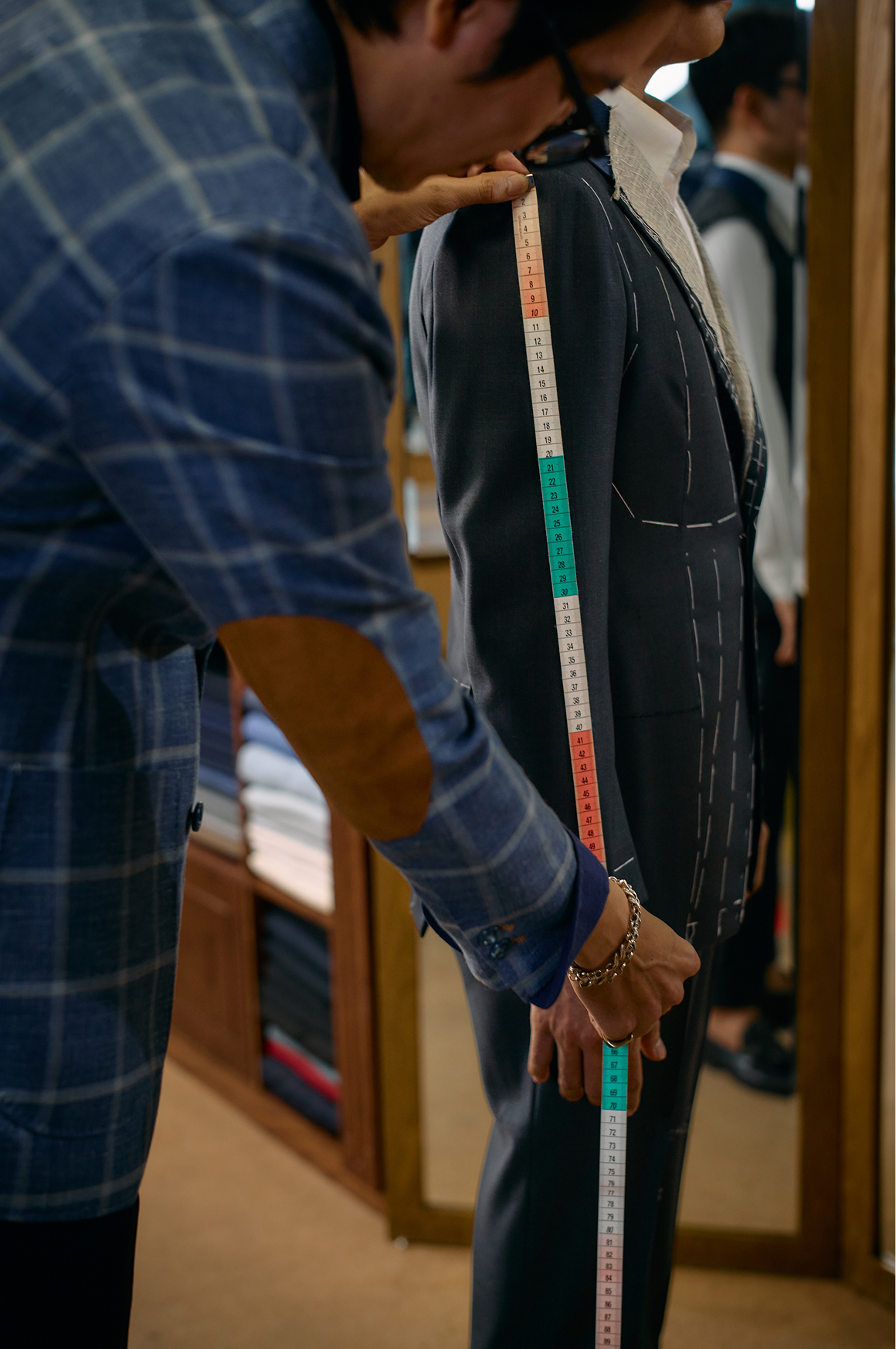
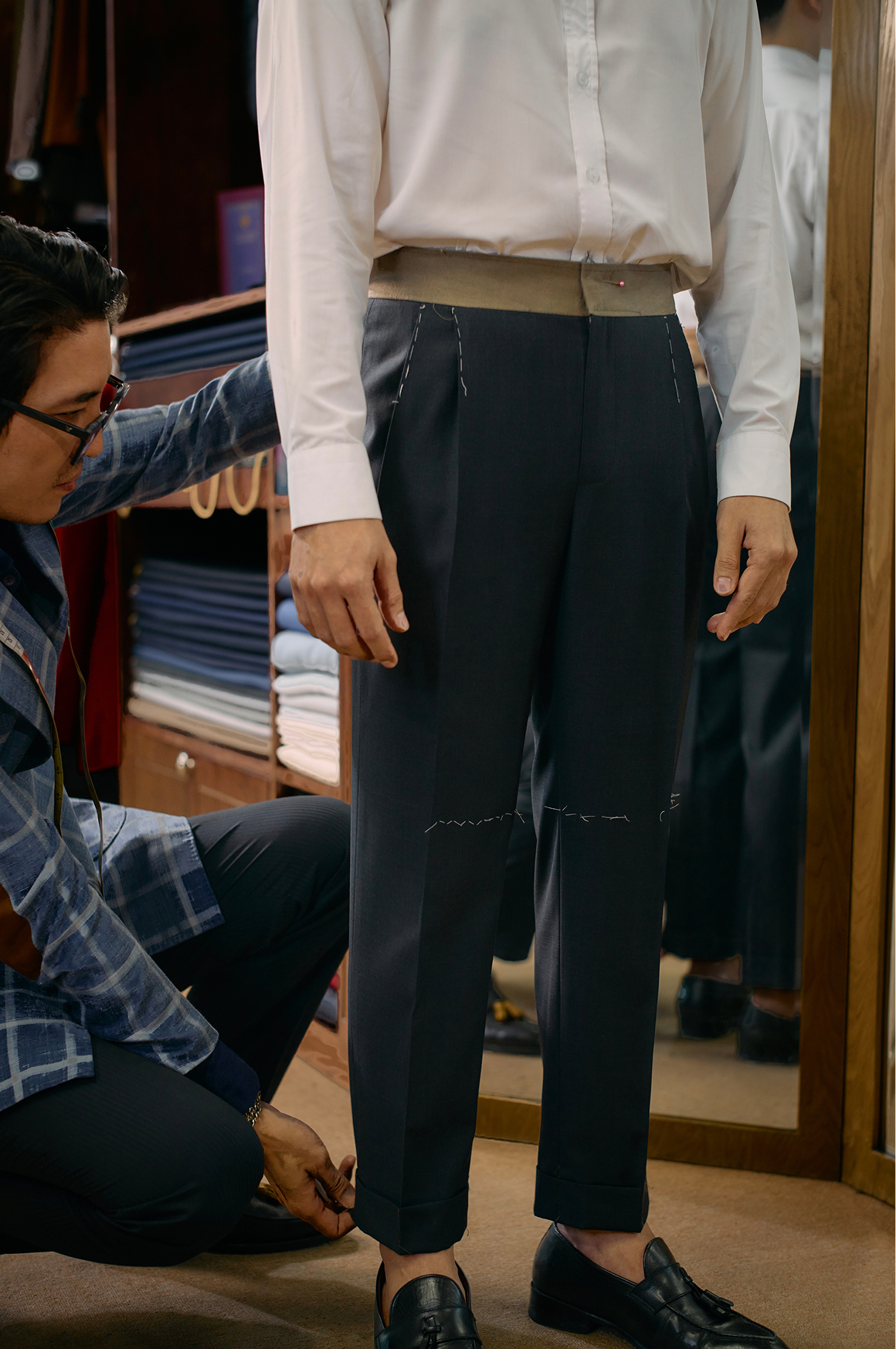
Every tailor measures a little differently, and every made to measure manufacturer reads numbers in its own way. A chest taken over a shirt, or a sleeve taken from the shoulder point or the neck, can change a jacket by a few centimetres.
So before your first order, we send our measuring guide slides and walk you through them on a call. After that, you measure your own clients, and you can call us whenever a measurement feels unclear.
3. Measure your client and fill in the order sheet
Partners print our measurement order sheet, fill in the numbers and notes by hand or on screen, and send it back with the order. One sheet per garment keeps everything clear.
The numbers tell us the size. The notes tell us the person. These are the notes that help most:
- Posture: stands straight, leans forward, one shoulder lower.
- Fit preference: close and sharp, or easy and relaxed.
- Shoulders: sloping or square, and how much padding the client likes.
- Photos: front, side and back, standing naturally in a fitted shirt.
- A garment they love: the measurements of a jacket that already fits well.
Clear, structured fields beat free text. Shops selling made-to-order goods find that one labelled field per measurement cuts fit errors.
4. We check the sheet before we cut
Before any cloth is cut, a cutter reads the whole sheet. This is the step that separates a careful made to measure manufacturer from a fast one. We compare the numbers with each other: chest against waist, sleeve against height, seat against thigh.
If something looks unusual, we ask. A message the day the sheet arrives costs a few minutes. A remake costs weeks, cloth and your client’s patience.
5. We cut and make in our own workshop
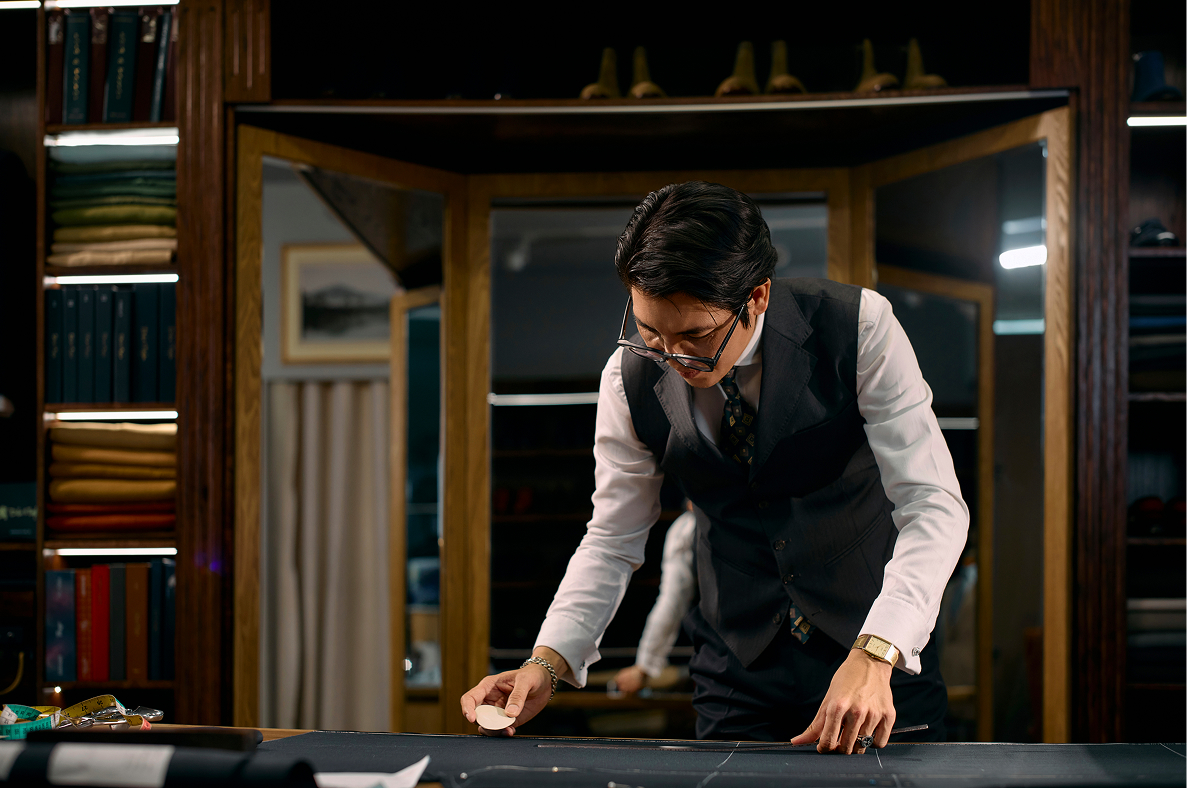
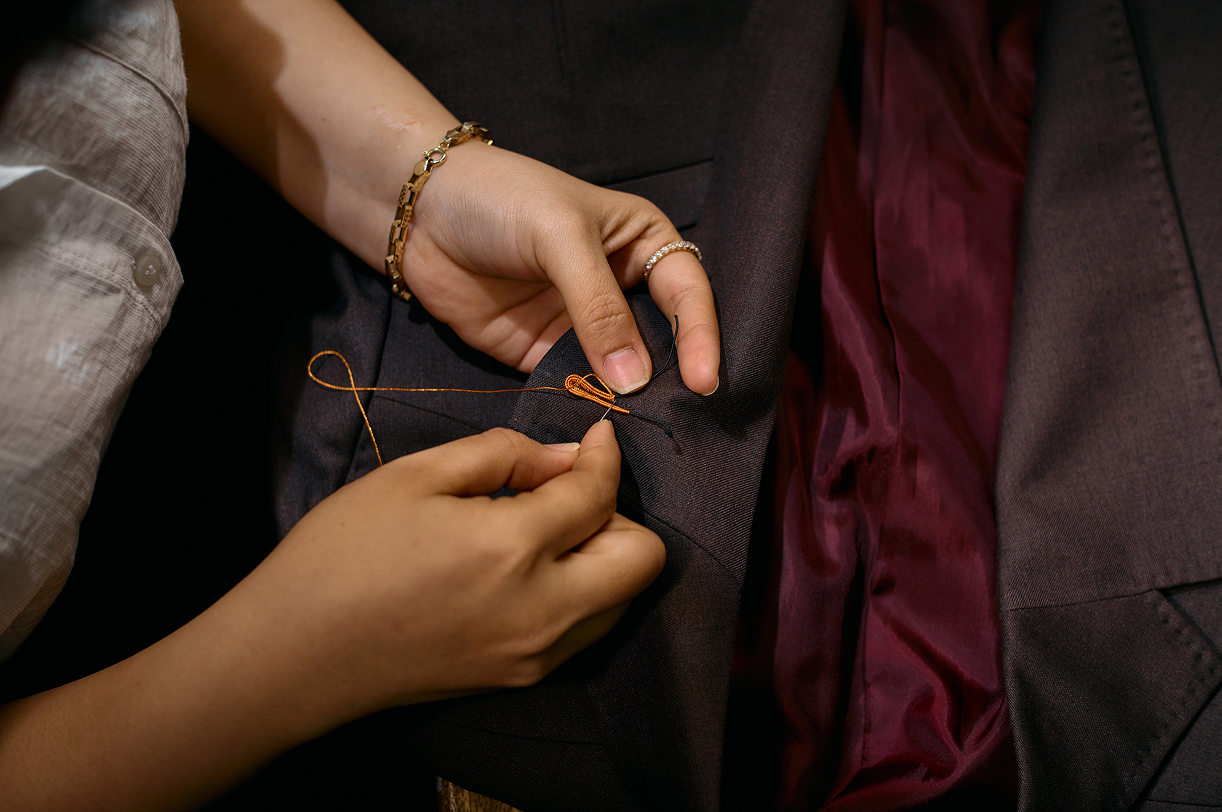
Your order is cut and sewn in our own tailoring workshop in Saigon, not sent on to another factory. The cutter chalks the cloth, cuts the pieces, and the jacket moves through the benches.
Canvas is basted in, lapels are shaped, buttonholes and finishing are done by hand where the order asks for it. We also make shoes in our own shoe workshop, so suits and shoes can travel together. Our guide to working with a custom shoe manufacturer for tailors explains how shoe orders work.
6. We ship, you fit
We ship worldwide. When the piece arrives, you try it on your client, make the final small adjustments in your shop and hand it over.
Then comes the step many shops skip: tell us what you changed. A good made to measure manufacturer learns from every fitting, and so does a good shop. If you took in the waist or shortened a sleeve, write it on the next sheet for that client, so the next order starts closer.
Why do made to measure orders go wrong?
Most problems with a made to measure manufacturer start on the order form, not on the bench. In our experience, these five cause the most trouble:
- Measuring over a jacket or a thick shirt. Every layer adds to the chest and the arm.
- No posture notes. A forward lean changes the back length and the front balance.
- A different way of measuring. Agree the method once, then keep it.
- Missing photos. One side photo answers many questions.
- No feedback after the fitting. The same adjustment gets made again and again.
What should you look for in a bespoke production partner?
Whether you call it a made to measure manufacturer or a bespoke production partner, look for one who asks questions about your first sheets. That is a sign they read them. Also ask who cuts, where the work is sewn, and how they handle a garment that needs changing.
Our main guide to choosing a bespoke production partner in Vietnam covers these questions in more depth, and we have also listed 12 questions to ask a tailoring production partner.
How we work as a made to measure manufacturer at ManGii
We have run our own tailoring and shoe workshops in Saigon since 2015. Today we make for 18 partner tailoring houses in six countries, on three continents. In more than ten years we have dressed 35,000+ clients and made 120,000+ tailored pieces.
We think good partnerships come from small habits: reading every sheet, asking early and listening after each fitting.
We make suits, shirts, trousers and coats, and custom shoes, both Goodyear welted and Blake stitched. We quote each order separately, based on the cloth, the construction and the volume. We also help people who are opening a tailoring shop of their own.
Frequently asked questions
Who takes the measurements?
You do, in your shop. We send our measuring guide and train you on a call first, so your numbers match the way our cutters read them.
What do I send with each order?
The filled-in order sheet with measurements, style choices and notes on posture and fit. Front, side and back photos of the client help a lot.
Can you make shoes as well as suits?
Yes. We have our own shoe workshop and make Goodyear welted and Blake stitched shoes for partners, alongside suits, shirts and coats.
Do you ship outside Vietnam?
Yes, we ship worldwide. Our 18 partner houses are in six countries on three continents.
How is pricing set?
We quote each order separately, based on the cloth, the construction and the volume. Send us what you have in mind and we will reply with a quote.
What happens if a garment needs changing?
Small adjustments are usually made in your shop at the fitting. Tell us what you changed and note it on the next sheet for that client, so the next piece starts closer.
Send us your first order sheet
If you are looking for a made to measure manufacturer for your shop, start with one client and one sheet. We will read it with you and talk you through the rest.
See how our bespoke tailoring production works, then write to info@mangiico.com or get in touch about working together.