
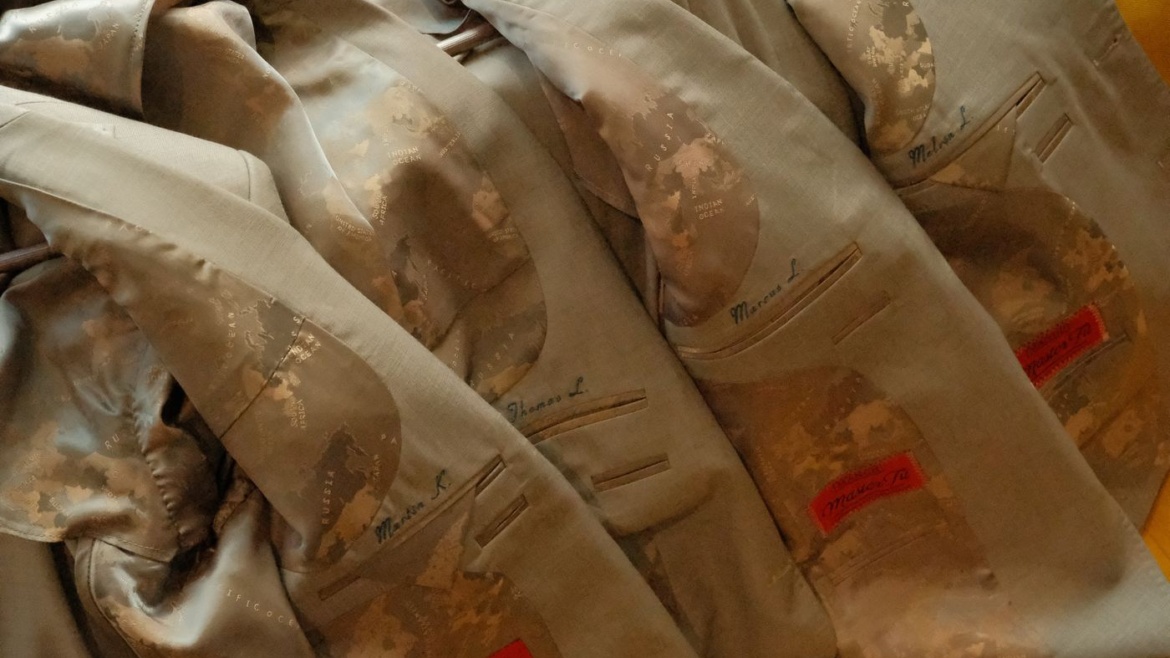
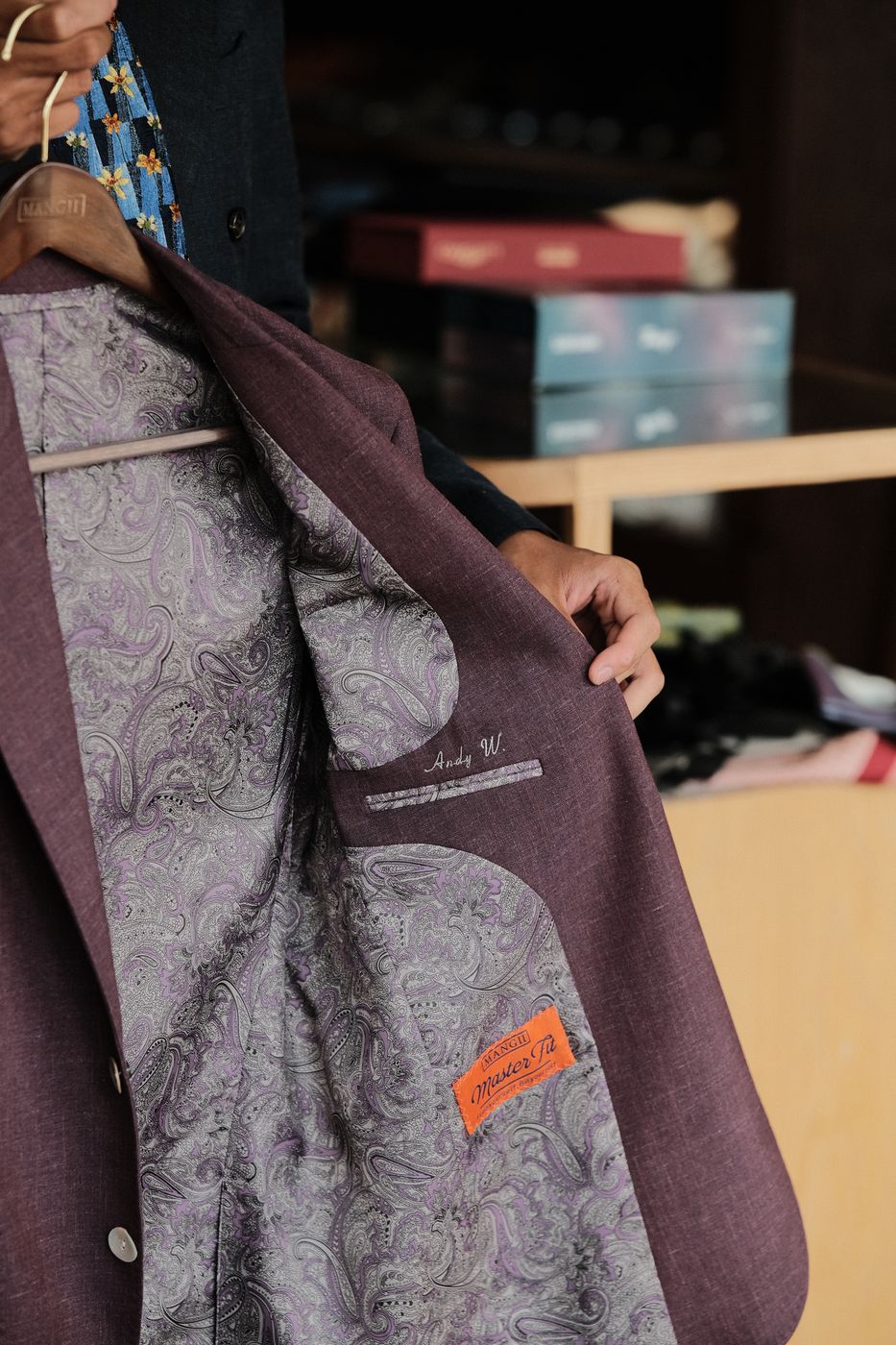
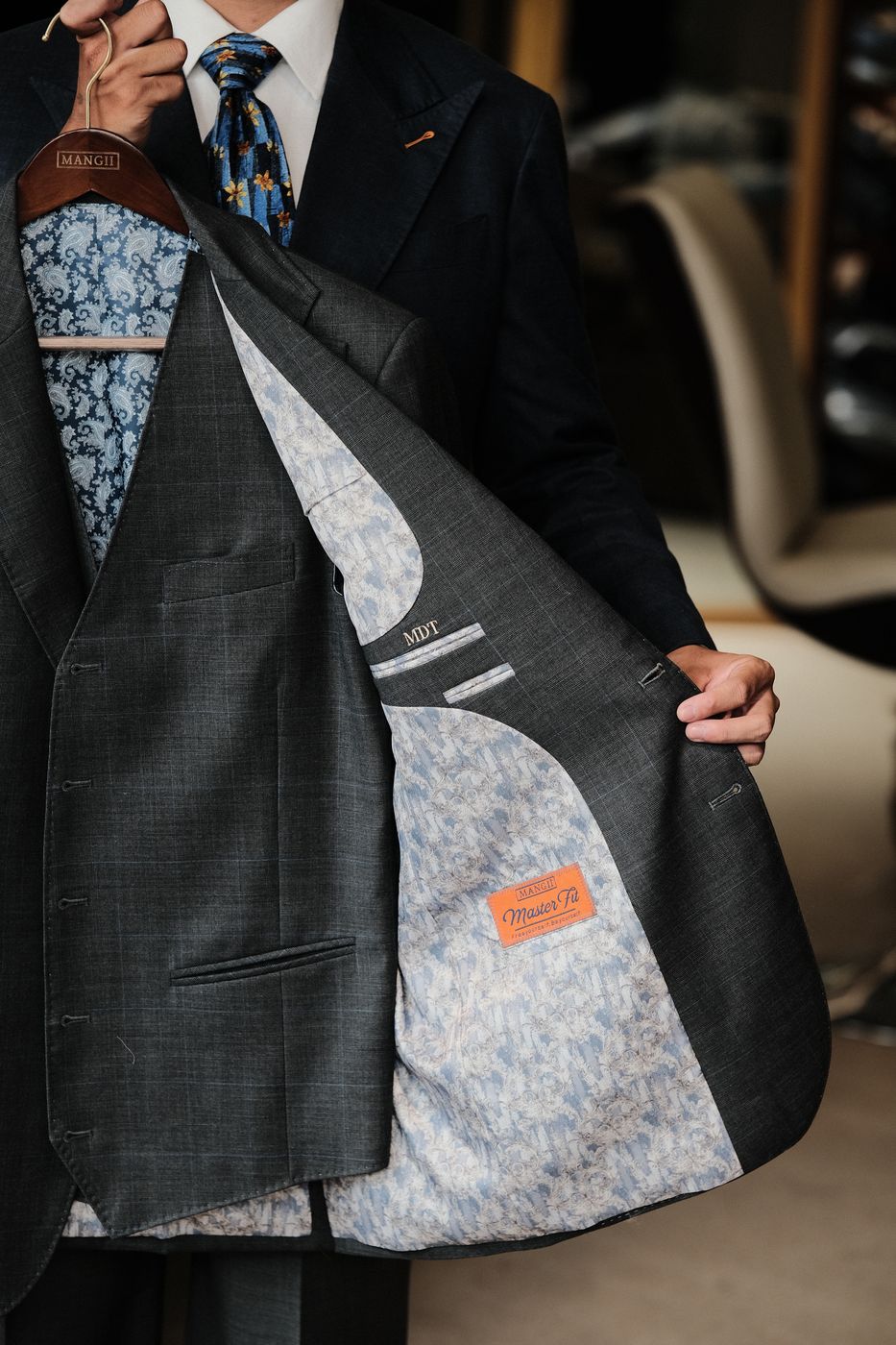
A custom lining is the part of a suit only you and a few others ever see. Open the jacket and there it is: a deep purple paisley, a quiet blue, a pattern you chose because it made you smile. Close it, and the suit is as calm as before.
In our Thao Dien shop, lining is often the last choice and the one people enjoy most. It is also more practical than it looks. A lining changes how the jacket slides on, how it hangs and how warm it feels in Saigon’s heat.
This guide covers what a lining does, how to choose the colour and pattern, and how to keep a lined suit comfortable in a hot climate.
The short answer
- What it does: a lining helps the jacket slide on, hang cleanly and last longer.
- What you choose: colour, pattern and how bold it is, from the linings we have in the shop.
- Formal or fun: plain linings for formal suits; patterns for everyday and occasion suits.
- In the heat: a light lining, a breathable cloth and the right construction keep a suit comfortable.
- Time: the same as any suit, about two weeks (about three for full canvas), with two fittings.
Table of Contents
What does a custom lining actually do?
A custom lining is a thin layer of fabric sewn inside the jacket, and sometimes inside the trousers. It does three jobs.
- It helps the jacket slide on and off. A smooth lining moves easily over a shirt sleeve, so the jacket does not catch.
- It covers the inside work. Seams, canvas and pockets stay hidden and protected.
- It helps the jacket hang cleanly. The outer cloth falls more smoothly, without clinging to the shirt.
A lining also takes some of the wear. Friction from shirts and the body hits the lining first, which helps protect the outer cloth over the years.
How do you choose the colour of a custom lining?
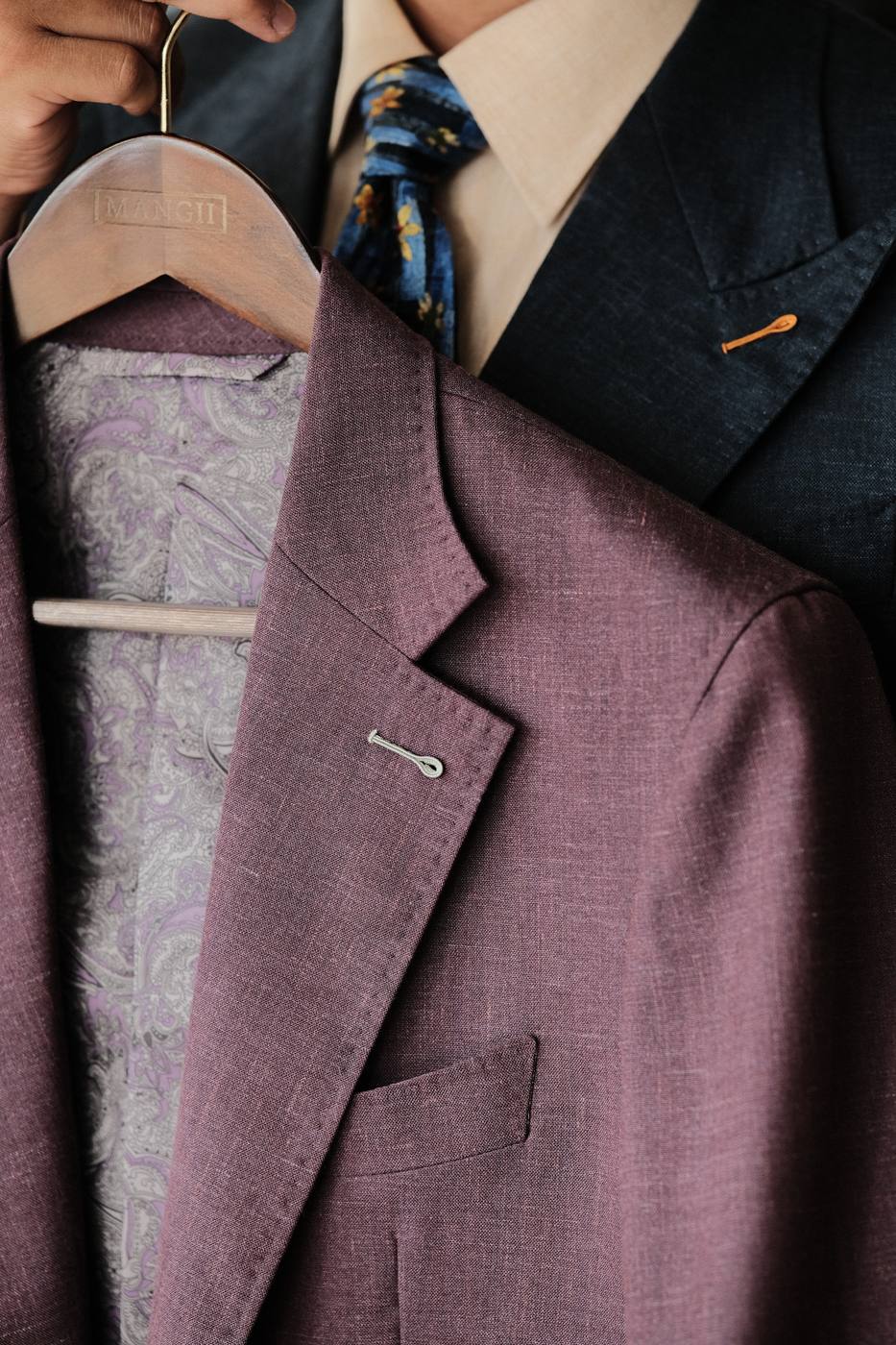
Start with the outer cloth. A custom lining looks best when it has some link to the suit, even if that link is subtle.
| Approach | How it looks | Good for |
|---|---|---|
| Tone on tone | Close to the cloth colour | Formal suits, black tie, conservative offices |
| Contrast | A different colour from the same family | Everyday suits with a little character |
| Pattern | Paisley, stripes or prints | Weddings, celebrations, suits you love to wear |
A navy suit with a mid-blue lining is quiet and smart. The same suit with a purple paisley lining feels personal without changing how it looks closed.
If you are unsure, hold the lining against the cloth in daylight. Ask us to take both to the shop window; colours under shop lights can look quite different outside.
Paisley, plain or bold: which pattern suits you?
Pattern is where most people have fun. There is no wrong answer, but a few simple guidelines help.
- Paisley is a classic for a reason. It is lively up close and reads as texture from a distance.
- Plain colours look clean and timeless, and work in every setting.
- Stripes are often used in sleeves, where they slide easily and add a small surprise.
- Large prints are bold. Keep them for a suit you will wear to celebrate, not to negotiate.
Think about who will see it. A lining shows when you take the jacket off, hang it on a chair or reach for your wallet. Choose something you are happy for people to notice.
Is a lined suit comfortable in a tropical climate?
Yes, with the right choices. Saigon is hot and humid most of the year, and we think about this in every suit we make.
A lining adds a thin extra layer, so the cloth and construction around it matter more. Suits for tropical climate work best when every layer is chosen to let air through.
- Choose a breathable outer cloth. Linen, cotton and lightweight tropical wool all breathe well.
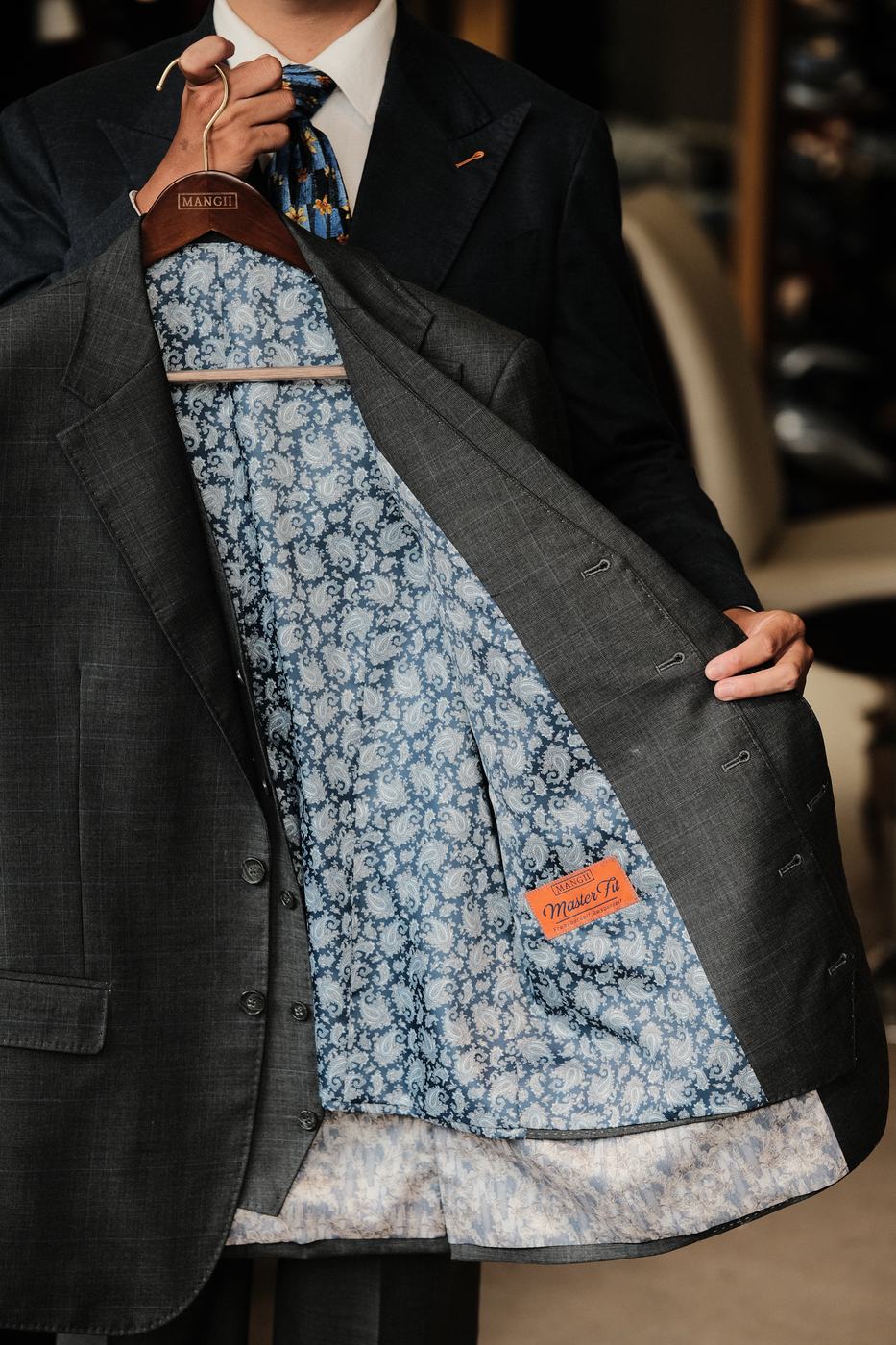
- Choose a light lining. A smooth, thin lining is cooler than a heavy one.
- Think about the construction. Less structure inside the front can make a jacket lighter.
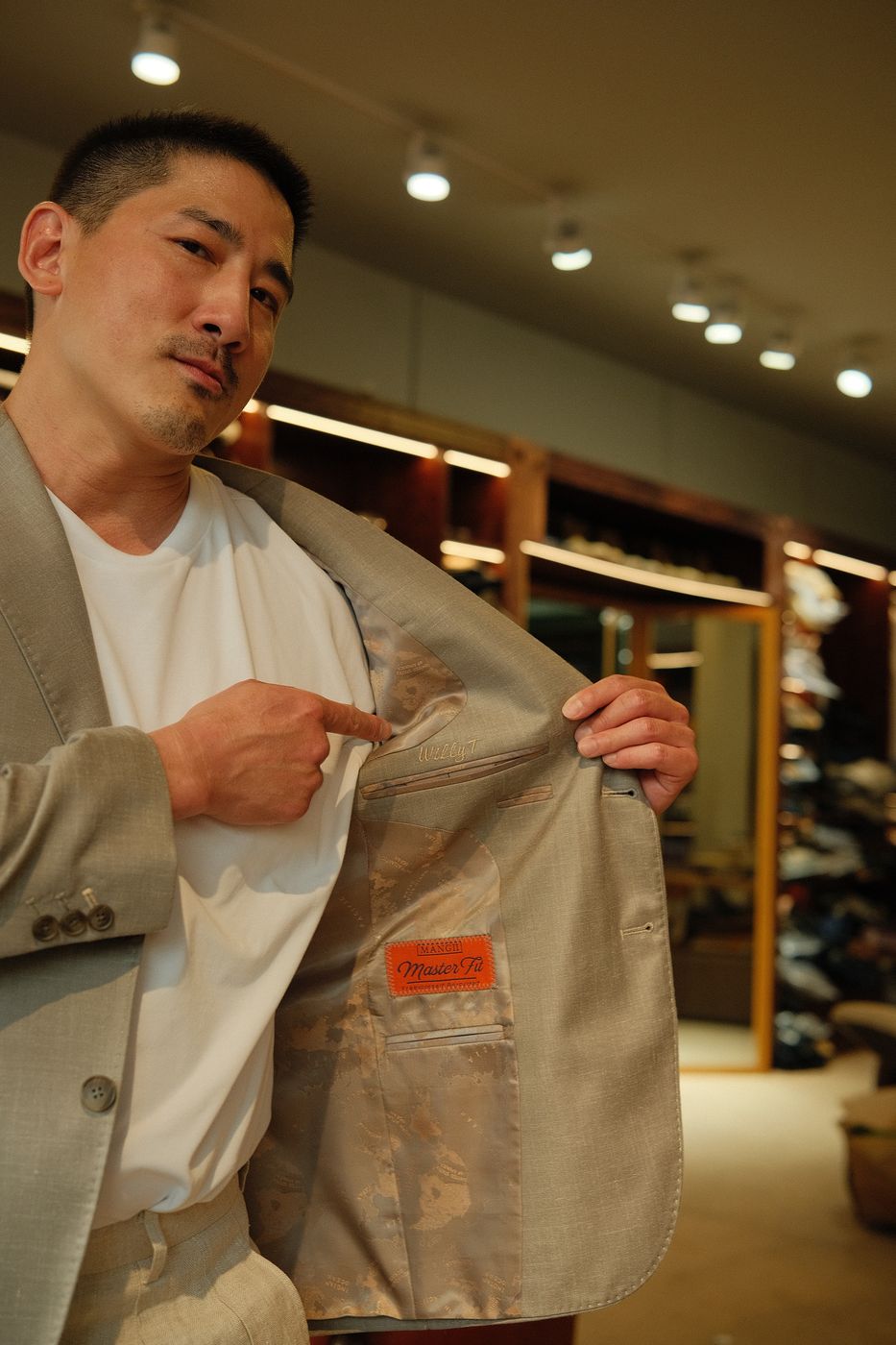
- Ask about a half lining. A butterfly lining covers only the shoulders and upper back, so more air can move.
We make half-lined jackets with a butterfly lining: the lining sits across the shoulders and upper back in a shape like a butterfly’s wings, and the rest of the jacket is left open. We also make unlined jackets, though a few parts of the jacket always need some lining.
Both are lighter and cooler, but they show more of the inside work, so the seams need neater finishing. This look at half-lined and unlined jackets explains the trade-offs well. Contact us to find out more about which option suits your cloth and construction.
Our guide to linen, cotton and tropical wool suits for Saigon covers the outer cloth in more detail.
How does lining fit into a lightweight suit for hot weather?
A lightweight suit for hot weather is a team effort. Cloth, lining, canvas and fit all work together, and a mistake in one cancels out the others. Our complete guide to suits for hot weather puts all of them together.
| Layer | For more comfort | Watch out for |
|---|---|---|
| Outer cloth | Open weaves, linen, cotton, tropical wool | Heavy winter cloth |
| Lining | Light and smooth | Thick or stiff linings |
| Inside structure | Lighter construction | Heavy padding in the chest |
| Fit | Close but not tight | Tight armholes and backs |
Fit matters more than people think. A jacket that is too tight traps heat against the body. A little ease across the back and under the arm lets air move.
For more on what goes inside the front of the jacket, see our guide to full canvas, half canvas and fused suits.
Which custom lining suits each occasion?
The same person might want three very different linings for three suits. Here is how we would think about the most common ones.
| Occasion | Lining idea | Why |
|---|---|---|
| Office, every day | Tone on tone or a quiet contrast | Looks smart when the jacket comes off at your desk |
| Wedding | A colour from the wedding, or a pattern you love | Shows in photos when the jacket opens |
| Black tie | Plain, close to the cloth | Keeps the formal look calm inside and out |
| Travel | Light and smooth | Comfortable on long days and in warm cities |
For grooms, the lining is a lovely place for a personal touch. Some choose the colour of the flowers or the bridesmaids’ dresses, so it appears quietly in every photo where the jacket is open.
For expats who wear a suit most days, we often suggest a lightweight suit for hot weather with a light, smooth lining, and a second suit with a bolder lining for evenings and weekends. Suits for tropical climate do not have to be plain inside.
What details go with a custom lining?
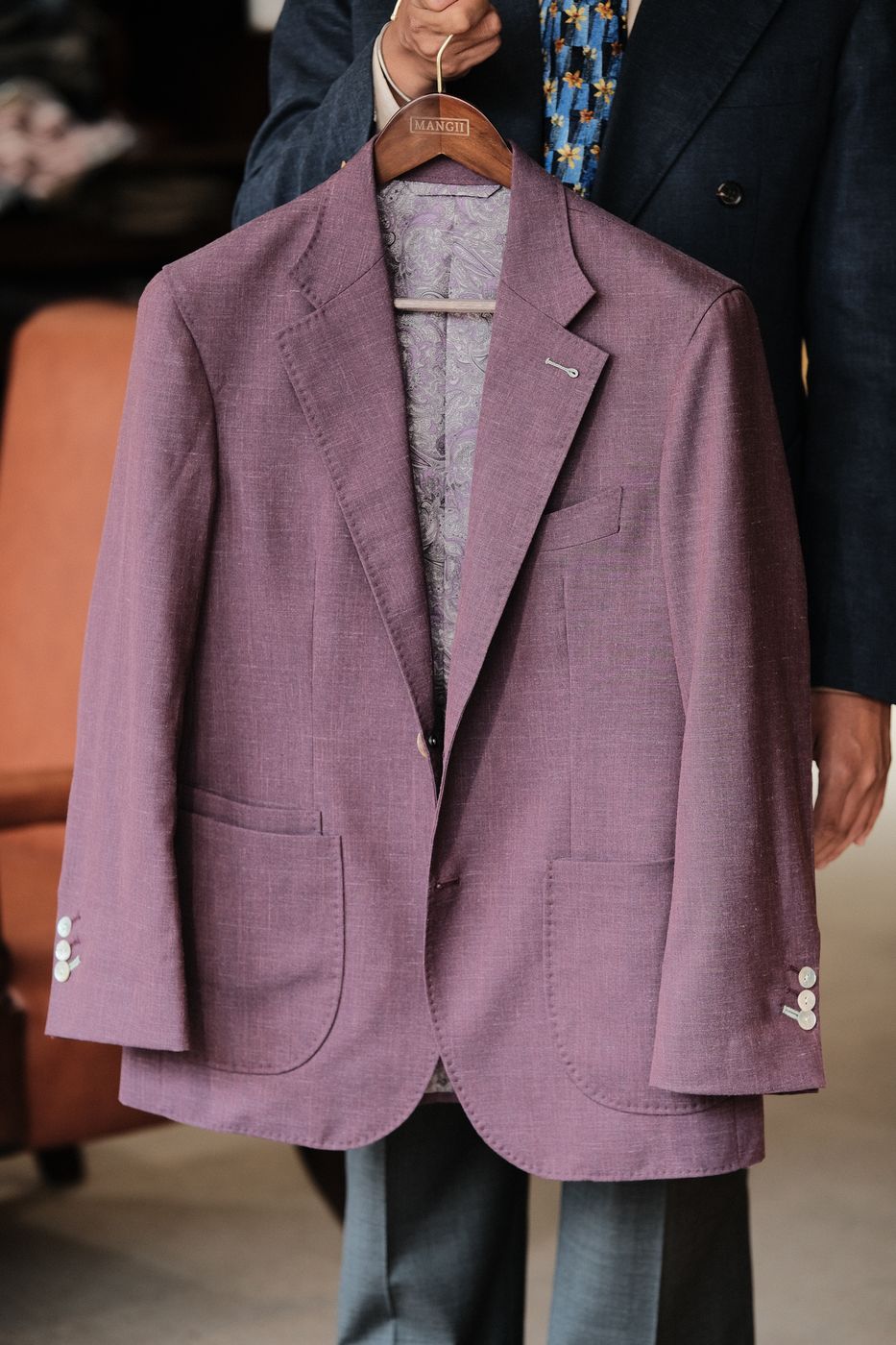
Lining is part of a set of small details worth talking through at your first visit. Together they make the jacket feel like yours each time you put it on.
- Piping: a thin edge in a contrasting colour along the lining seams.
- Inside pockets: where you need them, for a phone, a pen or a passport.
- Sleeve lining: often a striped or plain lining, so the arm slides in easily.
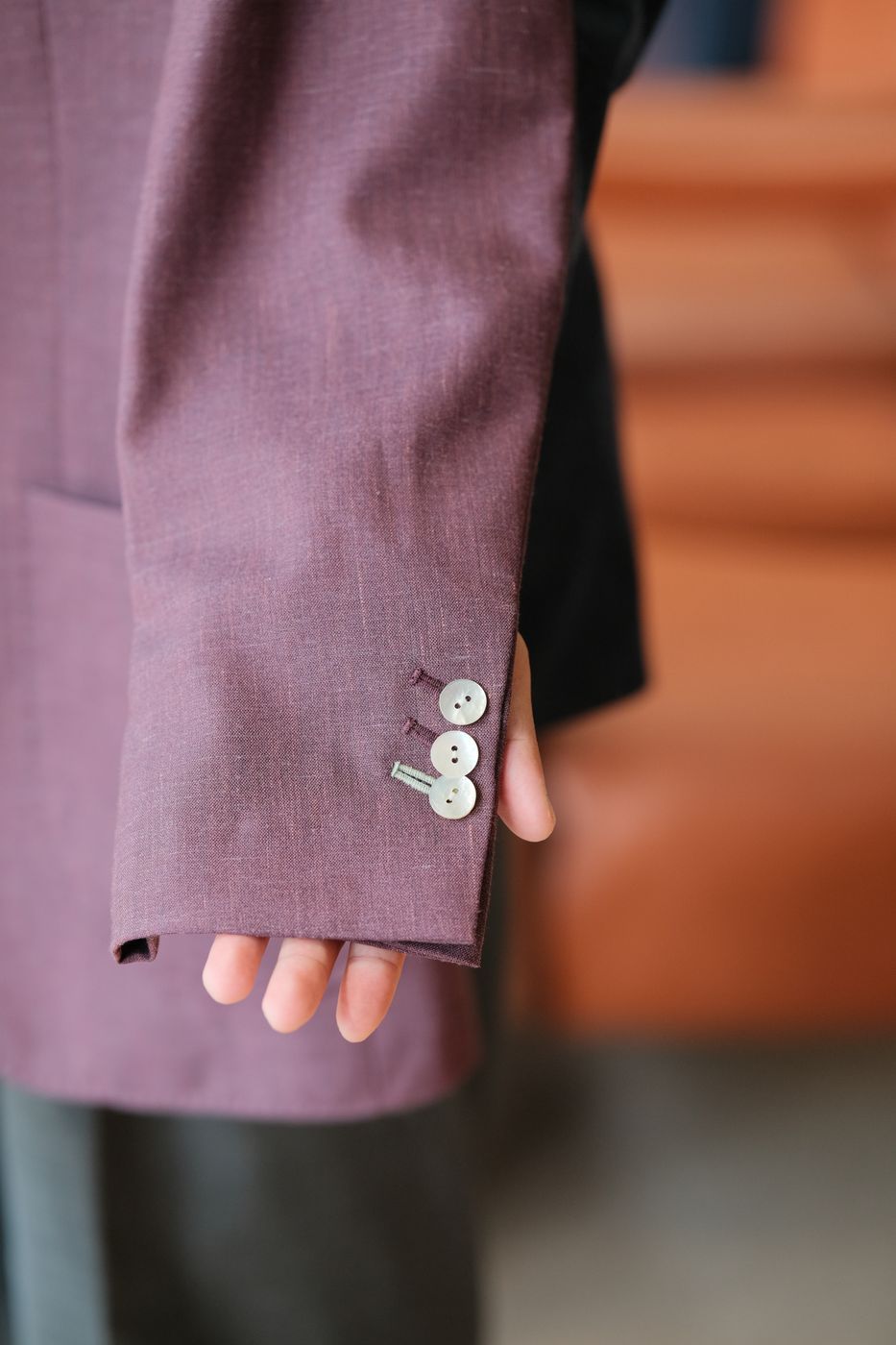
- Buttons: chosen to match the cloth and to pick up a colour from the lining.
Five lining mistakes we see
- Choosing in artificial light only. Check the colour by the window too.
- Ignoring the cloth. A lining with no link to the suit can look random.
- Going loud on a formal suit. Keep black tie and very formal suits quieter inside.
- Choosing a heavy lining for the heat. In Saigon, lighter is usually better.
- Forgetting the sleeves. Sleeve lining should slide easily over a shirt.
Choosing a custom lining at ManGii
At ManGii, choosing a lining happens at your first visit, after the cloth and construction. We put linings against your cloth so you can see them together, by the window if you like.
Every suit is cut for your body and fitted twice in our Thao Dien shop. It takes about two weeks, or about three weeks for full canvas. In more than ten years we have dressed 35,000+ clients, and the lining is still one of the choices people talk about most.
You can browse our cloths and linings on our materials page before you come in.

Frequently asked questions
Can I choose any colour for a custom lining?
You choose from the linings we have in the shop, in plain colours and patterns. Bring a photo or an idea, and we will find the closest match for your cloth.
Does a patterned lining make a suit less formal?
Not when the jacket is closed. A bold lining only shows when the jacket opens. For black tie or very formal events, many people still choose a plain lining in a colour close to the cloth.
Is a lining hot in Saigon?
Any extra layer adds a little warmth. A light, breathable lining, a lighter cloth and the right construction make the biggest difference. For the lightest jacket, ask about a butterfly half lining or an unlined jacket.
Can you replace the lining in an old jacket?
Bring the jacket in and we will look at it. Whether it is worth relining depends on the cloth and how the jacket was made.
Do trousers have lining too?
Many dress trousers have a lining over the knee or across the front. It helps the cloth hang smoothly. Ask us at your fitting.
How long does a suit with a custom lining take?
The same as any suit: about two weeks, or about three weeks for full canvas, with two fittings.
Come and choose your lining
Linings are much easier to choose in your hands than on a screen. Bring an idea, a photo or just your favourite colour, and we will help you find the one.
Visit us at 31 Xuan Thuy, Thao Dien, open every day from 10am to 7pm, or book a fitting online.