
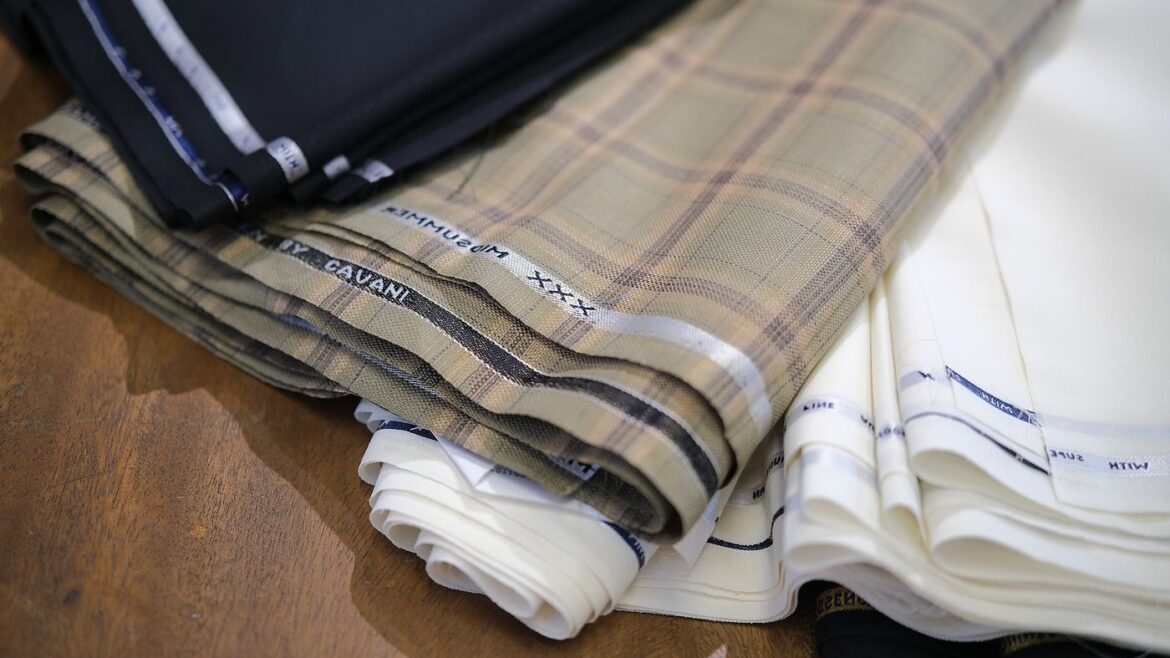
One afternoon in the rainy season, a client walked into our Thao Dien shop with a linen jacket over his arm. He had bought it for the heat. After one taxi ride and one meeting, the back looked like a folded map.
“Is there something cool that doesn’t do this?” he asked. It is the question we hear most from people who wear suits in Saigon. Should you choose a linen suit, cotton or tropical wool? Here is our answer, from the cutting table.
The short answer
- Linen suit: the coolest cloth, but it creases fast. Best for weekends, day weddings and relaxed dinners.
- Cotton: easy and comfortable, but warmer and damper in humid air. Best for casual suits and trousers.
- Tropical wool: breathes well and lets creases fall out. Best for the office and a first suit.
- Can’t decide? A wool-linen blend sits in between.
Table of Contents
What makes a suit cool in Saigon’s heat?
Three things decide how cool a suit feels: the fibre, the weave and the way the jacket is built. The fibre gets most of the attention, but a lightweight suit for hot weather needs all three to work together. Our complete guide to suits for hot weather covers each one, plus colour, shirts and shoes.
Saigon is warm all year, around 28°C on an average day, and the rainy season runs roughly from May to October. So a suit here has two jobs. It must let air through, and it must cope with sweat.
- Fibre: how the cloth handles heat and moisture.
- Weave: how much air passes through. Hold the cloth up to a window. If you can see faint light between the threads, air can move too.
- Construction: a heavy, fully lined jacket traps heat whatever the cloth. A lighter build helps as much as a lighter fabric.
Linen suit: the coolest choice, with one catch
Linen fabric is made from flax. Its fibres are long and smooth, so the cloth feels cool on the skin and dries quickly. On a hot Saturday, nothing in our shop feels lighter.
The catch is creasing. A linen suit has almost no spring, so every time you sit, bend an elbow or lean back in a car seat, it keeps the mark. In humid air it also loses some of its pressed shape.
We press a finished linen suit and it looks crisp for about as long as it takes to walk to the door. That is not a fault. It is what linen does.
Our tips for a linen suit:
- Choose a slightly heavier linen. It creases less and hangs better than a very thin one.
- Pick a mid or darker shade. Creases show less on navy, olive or tobacco than on white.
- Leave a little ease in the fit. Linen does not stretch, so a very close cut pulls and creases more.
- Wear it where a relaxed look is welcome: a garden wedding, a long lunch, a weekend in District 1.
Cotton: easy-going, but warmer than you think
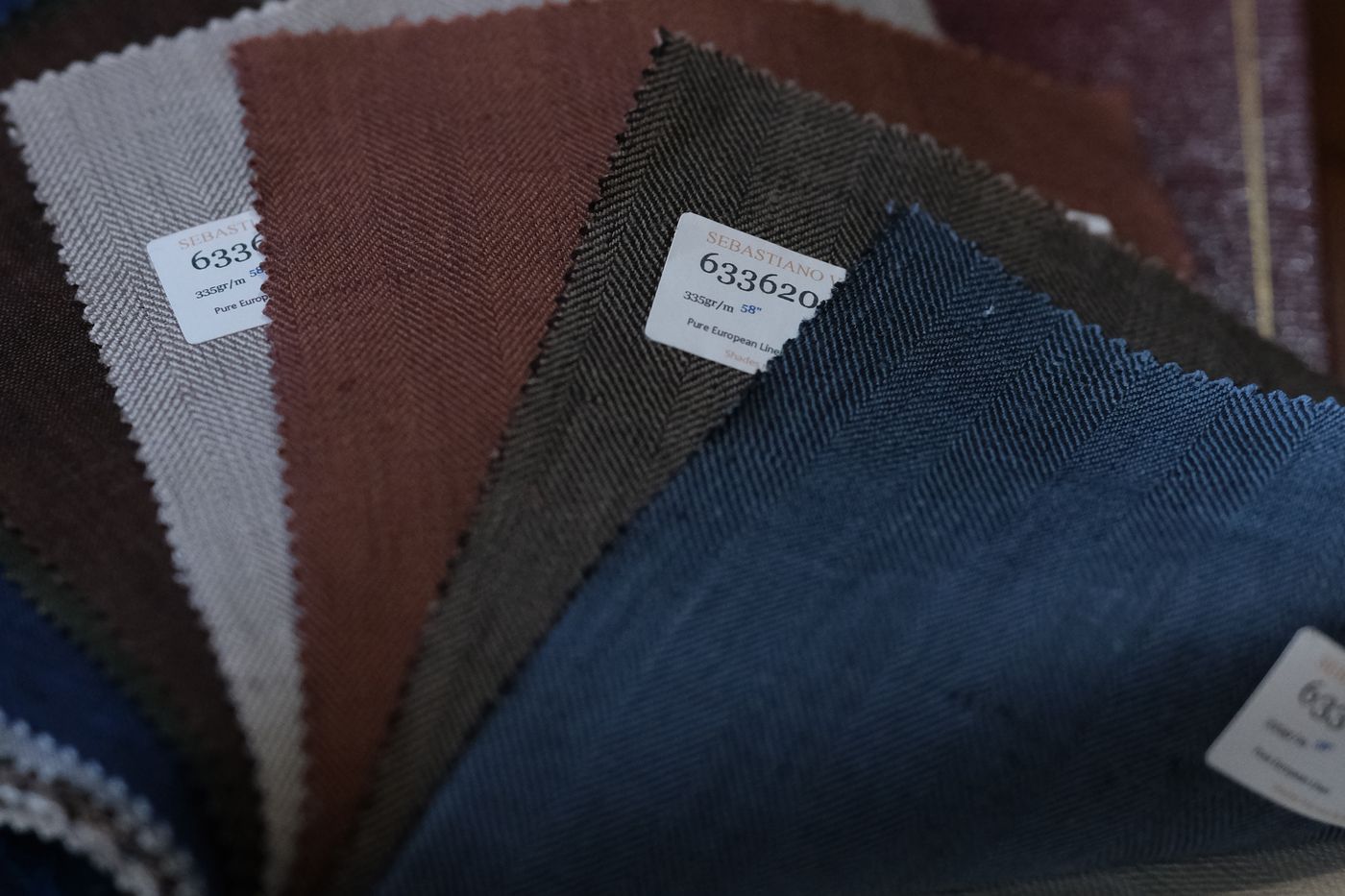
Cotton breathes and feels familiar, which is why so many people expect it to be cool. In dry heat it is. In Saigon’s humidity, cotton soaks up moisture and holds on to it, so it can start to feel damp and heavy by mid-afternoon.
It creases less than linen and more than wool. It also softens and fades a little with wear, which gives a cotton suit a relaxed, lived-in look.
We like cotton for casual suits, travel jackets and trousers you will wear often. For an office suit worn five days a week, we usually suggest something else.


Tropical wool: why tailors reach for it first
Wool in the heat surprises many people. “Tropical wool” means a lightweight wool with an open weave, often spun from tightly twisted yarns. It is not the thick wool of a winter coat.
Wool takes up moisture as vapour and lets it go again, so it feels drier against the skin than cotton. It also has natural spring. Hang a wool jacket overnight and most creases from the day fall out.
That is why it works for the office. It looks the same at 6pm as it did at 9am. As a rough guide, lightweight suiting is often labelled around 7 to 9 ounces, but the weave matters more than the number.
Our advice for a first suit in Saigon is nearly always a lightweight wool in navy or mid-grey. It works for meetings, weddings and dinners. You can read more about that first order in our guide to getting a suit made in Saigon.
Wool-linen blends: the middle path
If you love the look of a linen suit but need to stay presentable, a blend is worth a look. The mix changes from cloth to cloth, but a common one is mostly wool, with some linen and sometimes a touch of silk.
- The wool keeps the shape and lets creases recover.
- The linen adds coolness and a soft, dry texture.
- Silk, when there is some, gives a little depth to the colour.
A blend still creases more than pure wool, but far less than pure linen. It is a good choice for a wedding guest suit or a smart jacket for dinners.
Linen, cotton or wool: which fits your week?
| Cloth | In Saigon’s heat | Best for |
|---|---|---|
| Linen suit | Coolest; creases fast | Day weddings, weekends |
| Cotton | Comfortable; feels damp in humidity | Casual suits, trousers, travel |
| Tropical wool | Breathes; creases fall out | Office, a first suit |
| Wool-linen blend | Cool; creases less than linen | Wedding guests, smart dinners |
| Your plan | Our pick |
|---|---|
| Office, five days a week | Tropical wool, navy or grey |
| Outdoor wedding in the day | Linen suit or wool-linen blend |
| Evening wedding or event | Tropical wool, darker shade |
| Weekends and dinners | Linen suit or cotton jacket |
| Long flights and travel | Tropical wool |
How should a hot-weather suit be built?
The right cloth can still feel warm if the jacket is heavy. A softer, lighter build often makes more difference than a lighter cloth, a point many tailors agree on.
- Structure: half canvas keeps a natural lapel roll with less weight. We compare the options in our guide to full canvas, half canvas and fused jackets.
- Lining: a half-lined or unlined jacket lets heat out at the back. Our guide to choosing a custom lining explains the trade-offs.
- Colour: lighter shades stay cooler in the sun. A light grey feels a little cooler than a mid-grey.
Caring for a suit in Saigon’s humidity
Humidity is hard on every cloth. A few habits keep a suit fresh for years:
- Hang it on a wide, shaped hanger, not a wire one.
- Let it air for a few hours before it goes back in the wardrobe.
- If it gets wet in the rain, let it dry on its hanger, away from direct sun and heat.
- Rest a suit for a day between wears so the cloth can recover.
- Steam a linen suit to lift creases. Dry clean jackets rather than washing them.
How we do it at ManGii
Before we open a single swatch book, we ask where you will wear the suit, how warm you run and how often you will wear it. Those three answers narrow hundreds of cloths to a handful.

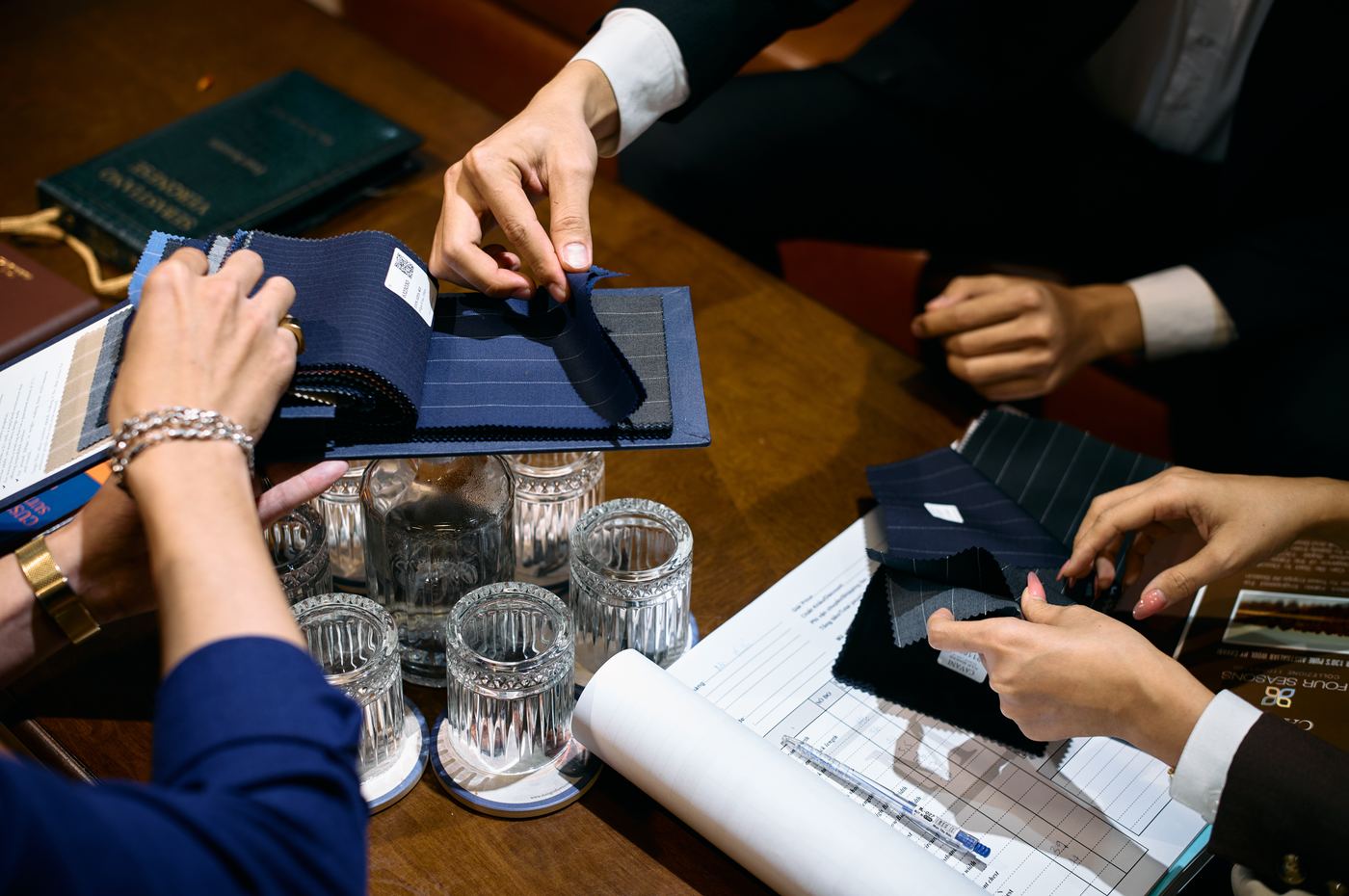
Then we lay the options on the table and carry them to the window. You see the weave in daylight, feel the weight and crush a corner in your hand to see how it recovers. We work with cloth from Italy, England and Australia, among others, across many budgets. You can see what we carry on our materials page.
Two-piece suits start from 7,700,000 VND, and from 16,500,000 VND in 100% wool. Every order has two fittings and takes about two weeks, or about three weeks for full canvas.
Frequently asked questions
Is a linen suit too casual for the office?
In most offices, yes, if you wear it every day. The creases read as relaxed. A linen jacket with wool trousers, or a wool-linen blend, is a smart middle ground.
Is wool too hot for Saigon?
Not if it is the right wool. A lightweight, open-weave tropical wool breathes well and handles sweat better than many people expect. Heavy wool and flannel are too warm for daily wear here.
Does linen shrink?
Linen can shrink if it is washed hot. We recommend dry cleaning linen jackets and steaming them between wears.
Should a linen suit be lined?
Usually only in part. A half-lined or unlined linen suit keeps the coolness that made you choose linen in the first place. A light lining in the sleeves helps the jacket slide on and off, and we talk this through when you choose the cloth.
Can I wear a linen suit to a wedding?
Yes, especially a daytime or outdoor wedding. Choose a mid or darker shade so creases show less, and take photos early in the day. If you are the groom and want to look crisp all day, a wool-linen blend is a safer choice.
Which suit colour is coolest in the sun?
Lighter colours stay cooler, so light grey, sand and pale blue are good choices for daytime. Navy is a little warmer in direct sun but the most useful colour for work and evenings.
Can I see and touch the fabrics before ordering?
Yes, and we think you should. Come to the shop and we will show you linen, cotton, wool and blends side by side.
Come and feel the cloth
Choosing a fabric is easier with it in your hand. Visit us at 31 Xuan Thuy, Thao Dien, open every day from 10am to 7pm, or book your appointment online.